
- E-mail: yqkexin@gmail.com
-
Prinova Global
News
Choosing the Best Induction Melting Equipment: A Complete Guide
Investing in induction melting equipment requires careful planning and informed decision-making.
March 17, 2025
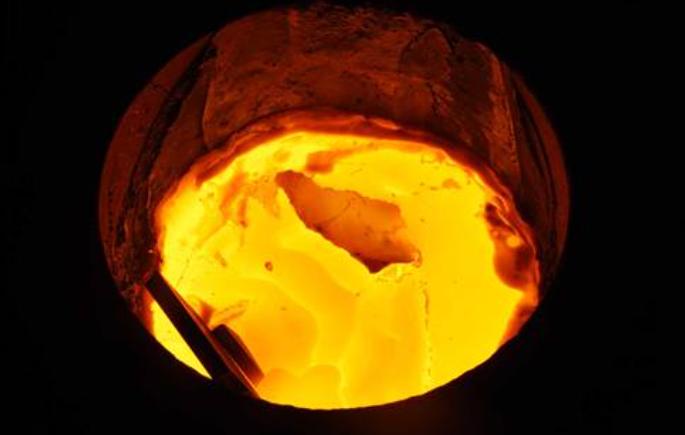
Induction melting equipment is a machine used in the metallurgical industry to melt metals using electromagnetic induction.
It is commonly used to melt a variety of metals such as steel, iron, copper, aluminum, gold and silver, with high efficiency and precise control of the melting process.
Given the variety of induction heating systems available on the market, it is critical to make an informed decision to ensure that the equipment you choose meets quality standards, energy-saving melting standards and regulatory compliance.
Here is a comprehensive guide to help you make an informed choice.
What is Induction Melting?
Induction melting is a process that uses electromagnetic induction to heat and melt metals without direct contact with a flame or heating element.
The technology relies on an induction coil that generates a high-frequency alternating current (AC), which creates an electromagnetic field.
When a conductive metal is placed within this field, eddy currents are created within the material, generating heat and causing it to melt.
Key features of induction melting:
Fast and efficient heating: The process melts quickly while minimizing heat loss.
Precise temperature control: Operators can precisely control the melting temperature for consistent results.
Clean and pollution-free: Since there is no combustion involved, oxidation and pollution are reduced.
Energy efficiency: Compared with traditional methods such as gas furnaces, induction melting is more energy-efficient.
Safe and environmentally friendly: There are no open flames or toxic emissions, making it a safer choice for industrial and laboratory use.
Different Types of Induction Melting Equipment
Induction melting equipment comes in various types and configurations, each tailored to specific melting requirements and industrial applications.
The choice of equipment depends on factors such as frequency, power capacity, metal type, and the intended process.
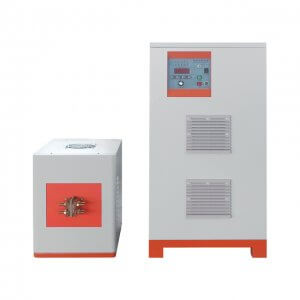
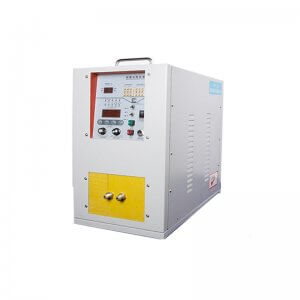
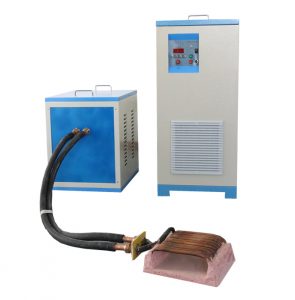
Below, we explore two key categories of induction heating systems: Medium Frequency Induction Heaters and Low Frequency Induction Melting Furnaces.
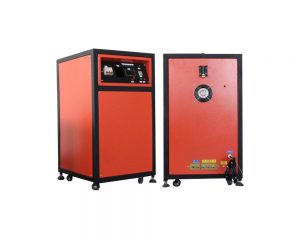
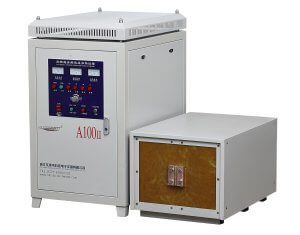
Medium Frequency Induction Heaters
Medium-frequency induction heaters are widely used in factories, laboratories, and workshops due to their simple design, ease of operation, low maintenance costs, and energy efficiency.
These systems operate at frequencies between 30 kHz and 80 kHz, making them suitable for a broad range of industrial heating applications.
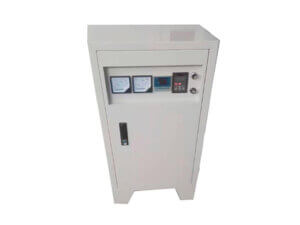
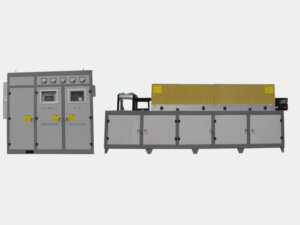
Low-Frequency Induction Melting Furnaces
Low frequency induction melting furnaces operate at significantly lower frequencies and are particularly effective for deep heat penetration.
These furnaces are designed to handle large metal batches (over 2 kg) and are widely used in heavy industrial applications that require thorough and uniform heating.
How Does an Induction Melting Furnace Work?
An induction melting furnace operates on the principle of electromagnetic induction, efficiently generating heat to melt metals without direct contact with a heating element.
This process provides fast, precise, and energy-efficient melting, making it widely used in foundries, metal processing plants, and laboratories.

Advantages of Using An Induction Melting Furnace
An induction melting furnace offers several advantages over traditional melting methods, making it a popular choice in various industries, including metal casting, foundries, and recycling. Here are the key benefits:
1. Energy Efficiency
Induction furnaces use electromagnetic induction to generate heat directly within the metal, reducing energy loss and achieving high efficiency. Faster heating times result in lower energy consumption compared to gas-fired or resistance furnaces.
2. Faster Melting Process
The direct heating mechanism enables rapid melting, increasing production speed and reducing cycle times. Higher throughput makes it ideal for industrial-scale metal processing.
3. Precise Temperature Control
Induction furnaces allow accurate and consistent temperature regulation, preventing overheating and ensuring optimal metal properties. Reduced oxidation and better alloy composition control.
4. Cleaner and Environmentally Friendly
Unlike fossil fuel-based furnaces, induction furnaces produce no combustion gases, reducing carbon emissions. Minimal slag formation and cleaner melting conditions improve metal purity.
5. Improved Metal Quality
Induction heating provides uniform temperature distribution, reducing hot spots and ensuring homogeneous melting. Less contamination from fuel residues or external impurities.
6. Flexibility in Melting Various Metals
Suitable for a wide range of metals, including iron, steel, copper, aluminum, gold, and silver. Easy to switch between different metals without significant modifications.
7. Enhanced Safety
No open flames or direct fuel combustion reduces fire hazards. Lower risk of workplace accidents due to improved control and automation.
8. Reduced Maintenance Costs
Fewer moving parts and no need for fuel combustion result in less wear and tear. Longer lifespan compared to traditional furnaces.
9. Compact and Space-Saving Design
Induction furnaces are generally more compact than traditional furnaces, making them ideal for facilities with limited space.
10. Automation and Process Control Integration
Many modern induction furnaces support automation and digital monitoring, improving efficiency and consistency in metal production.
These advantages make induction melting furnaces an excellent choice for modern metal processing industries, providing cost savings, environmental benefits, and superior metal quality.

Applications of Induction Melting
Induction melting is a process that uses electromagnetic induction to heat and melt metals and other conductive materials. It has several applications across various industries due to its efficiency, precision, and cleanliness. Here are some key applications:
Metallurgical Industry
Steel and Alloy Production: Used for melting iron, steel, and specialty alloys for casting and forging.
Superalloy Manufacturing: Produces high-purity superalloys used in aerospace and high-performance applications.
Powder Metallurgy: Melts metals for atomization into fine powders for 3D printing and sintering processes.
Jewelry and Precious Metals
Used for melting gold, silver, platinum, and other precious metals with high precision and minimal loss.
Foundry and Casting
Investment Casting: Produces intricate metal parts for aerospace, automotive, and medical applications.
Die Casting: Melts metals like aluminum and zinc for mold-based mass production.
Automotive Industry
Used for producing engine components, gears, and other high-strength parts through casting and forging.
Aerospace Industry
Melts and refines titanium, nickel, and aluminum alloys for high-strength, lightweight components.
Electronics Industry
Used in the manufacturing of electrical components, including copper and aluminum conductors.
Medical Equipment and Implants
Produces biocompatible materials such as titanium for surgical implants.
Military and Defense
Produces high-performance alloys for weapons, armor, and specialized equipment.
The versatility and efficiency of induction melting make it an essential technology in modern metalworking and advanced manufacturing processes.

Factors to Consider When Choosing Induction Melting Equipment
When selecting induction melting equipment, several factors must be considered to ensure efficiency, cost-effectiveness, and suitability for a specific application. Here are the key factors:
- Metal Type and Melting Capacity
Consider the type of metal (ferrous or nonferrous) and its melting temperature. Select equipment with sufficient power to handle the required melting capacity for each batch.
- Power and Frequency Requirements
Low frequency (1-10 kHz): Suitable for large, deep melts (e.g., iron, steel).
Medium frequency (10-100 kHz): For medium-sized melts with good mixing.
High frequency (>100 kHz): Ideal for small melts, thin-walled parts, and precision applications (e.g., jewelry, electronics).
- Energy efficiency
Look for high energy efficiency to reduce operating costs. Equipment with modern control systems can optimize power use and minimize heat losses.
- Melting speed
Faster melting can reduce production downtime and increase efficiency. Select a system that provides a good balance between speed and energy consumption.
- Cooling System
Induction melting generates a lot of heat, so an effective cooling system (water or air) is required. Make sure the cooling system is compatible with your plant’s infrastructure.
- Size and Footprint
Make sure the equipment fits into the available workspace. Consider mobility if the equipment needs to be relocated frequently.
- Compliance with Industry Standards
Make sure the equipment complies with industry regulations (ISO, CE, UL, etc.). Compliance ensures reliability, quality, and safety.
By carefully evaluating these factors, you can select the best induction melting equipment for your production needs and operational goals.
Conclusion
Investing in induction melting equipment requires careful planning and informed decision-making. By assessing key factors, you can minimize risks, maximize efficiency, and ensure a valuable return on investment.
Evaluate your specific needs, compare available options, and choose a reputable supplier to guarantee optimal performance and reliability.
Related Articles
Explore News >
Request A Quote
Can't find the answer you need? Tell us about your application and our engineers will get back to you.