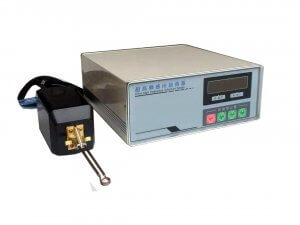
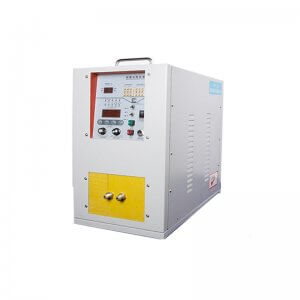
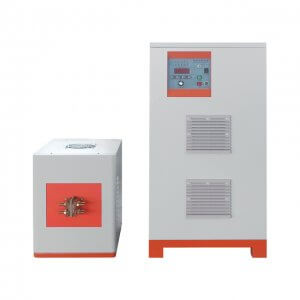
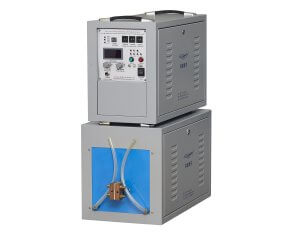
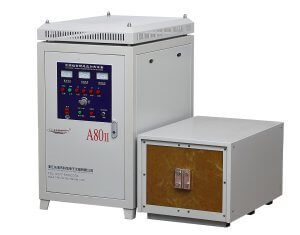
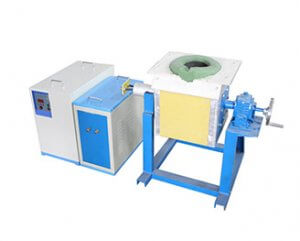
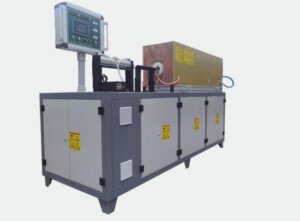
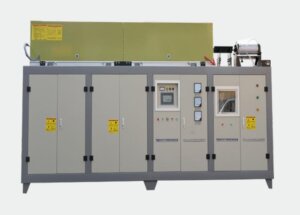
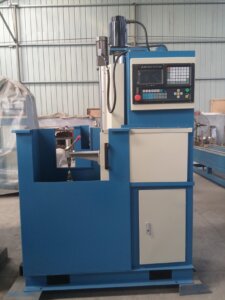
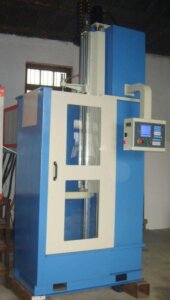
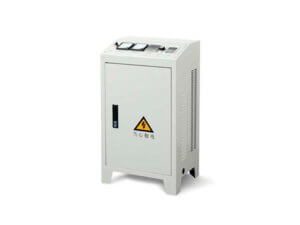
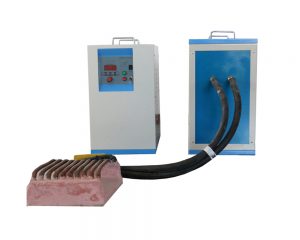
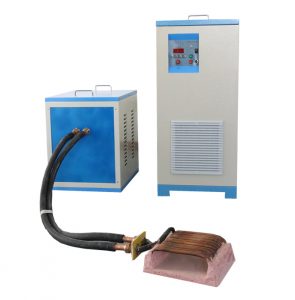
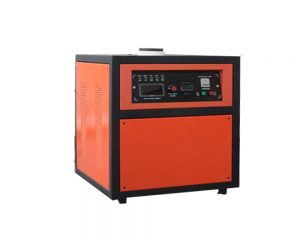
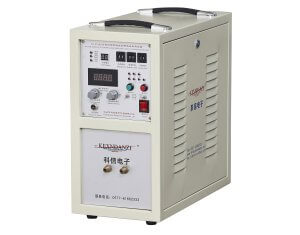
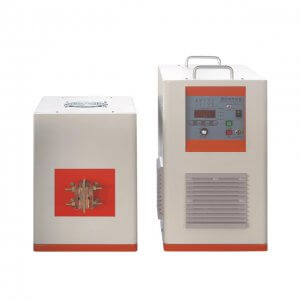
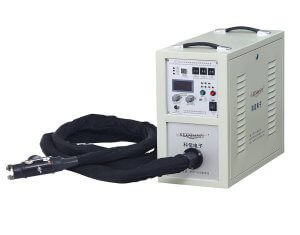
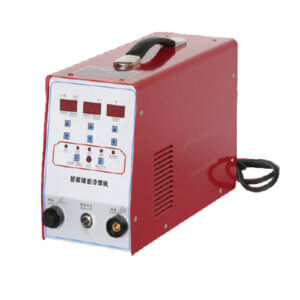
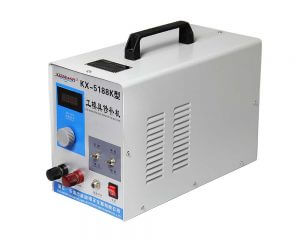
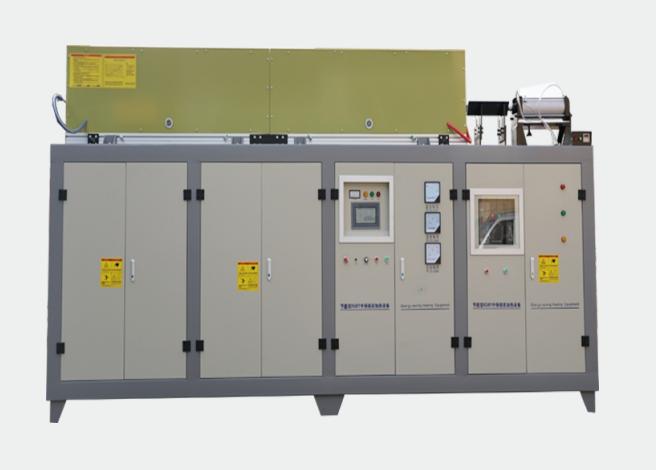
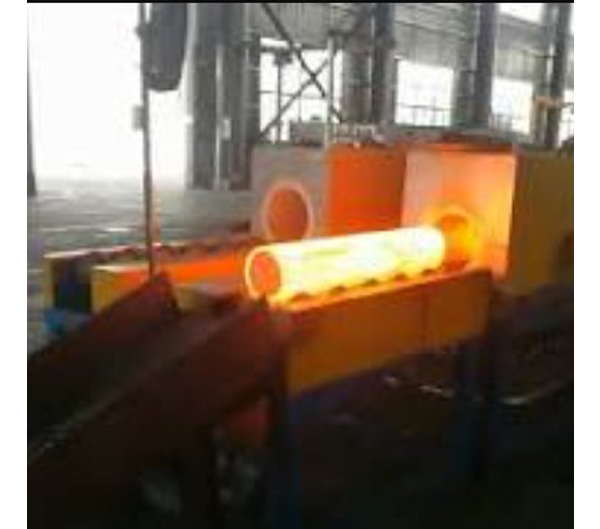
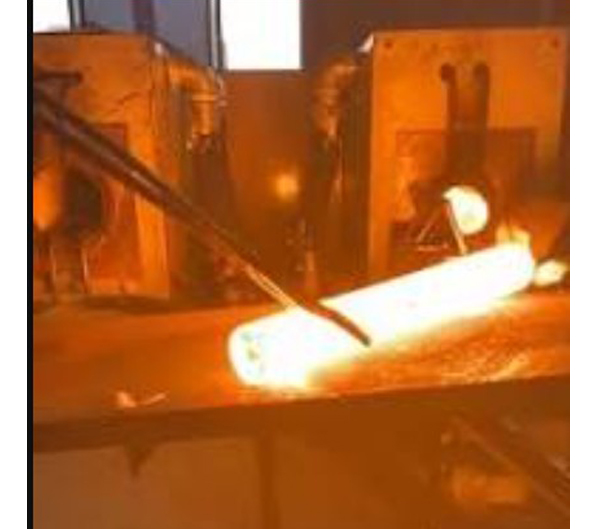
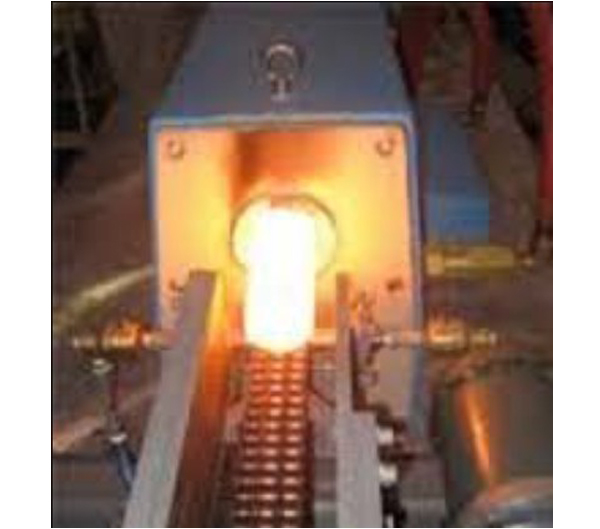
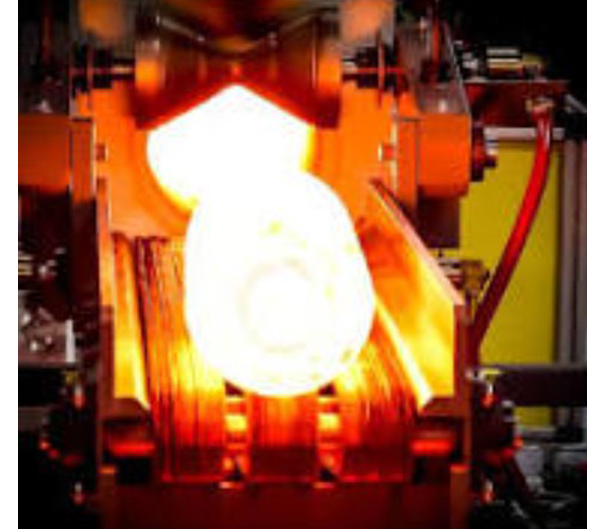
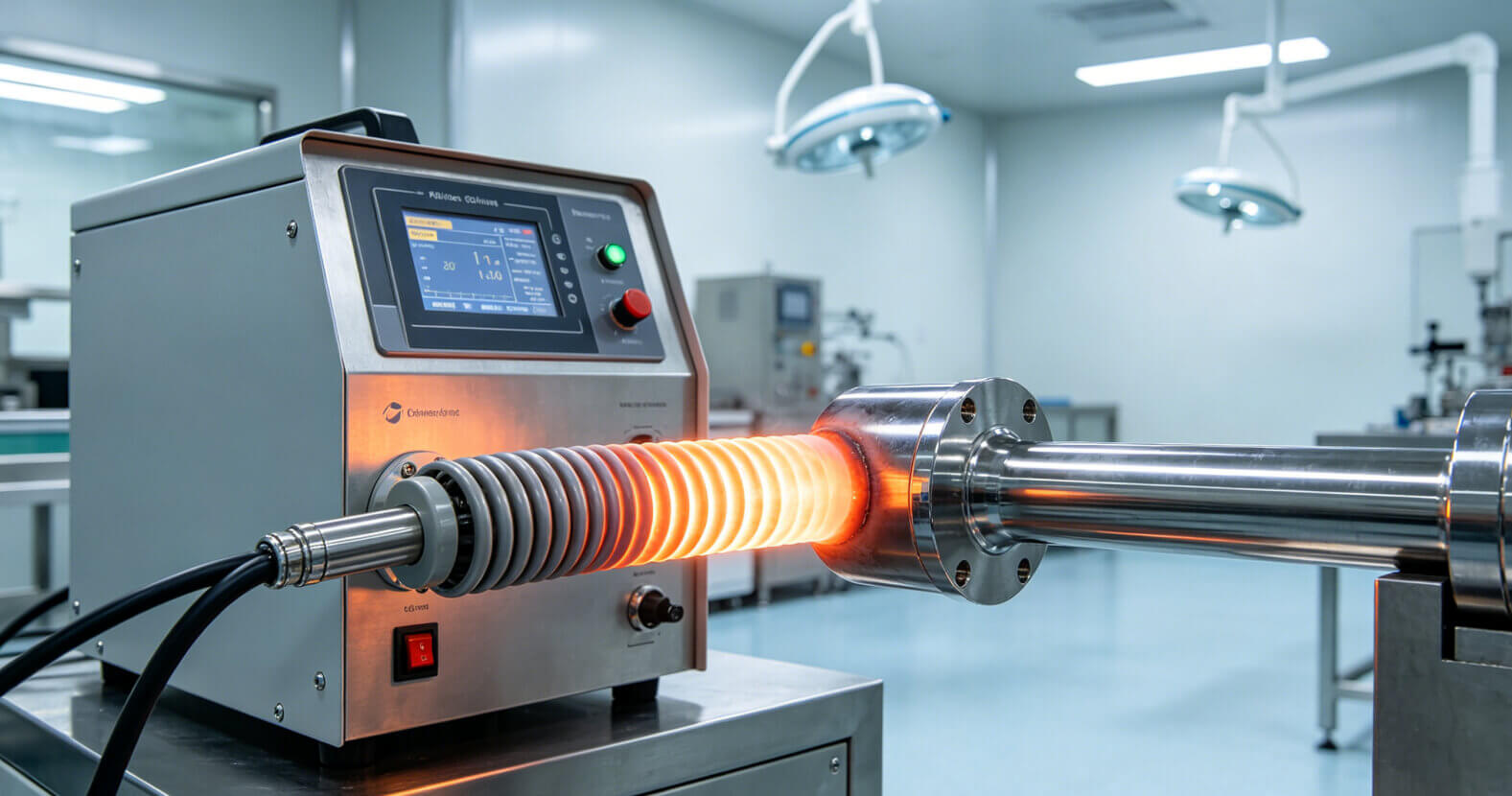
Intermediate frequency induction forging furnace is induction heating equipment for the purpose of heating metal forging or tempering heat treatment.
Intermediate Frequency Induction Forging Machine
Model
KXZP-400
KXZP-500
Power
400KW
500KW
Input Voltage
Three phase 380V/50Hz
Three phase 380V/50Hz
Input Current
640A
800A
Output Oscillation Frequency
1-5KHz
1-5KHz
Cooling Water Pressure
0.15-0.3MP
0.15-0.3MP
Dimension (L*W*H)
3200*1200*1200mm
3400*1200*1200mm
Intermediate frequency induction forging system offers a controllable and localized method of heat without contact with the parts (components) being heated. The heat of the electromagnetic heating equipment is generated by inducing an alternating magnetic field into electrically conductive materials. Electromagnetic heating equipment is very low cost to run and normally creates significant cost savings versus other traditional process heating technologies.
Intermediate frequency heating furnace is induction heating equipment for the purpose of heating metal forging or tempering heat treatment.
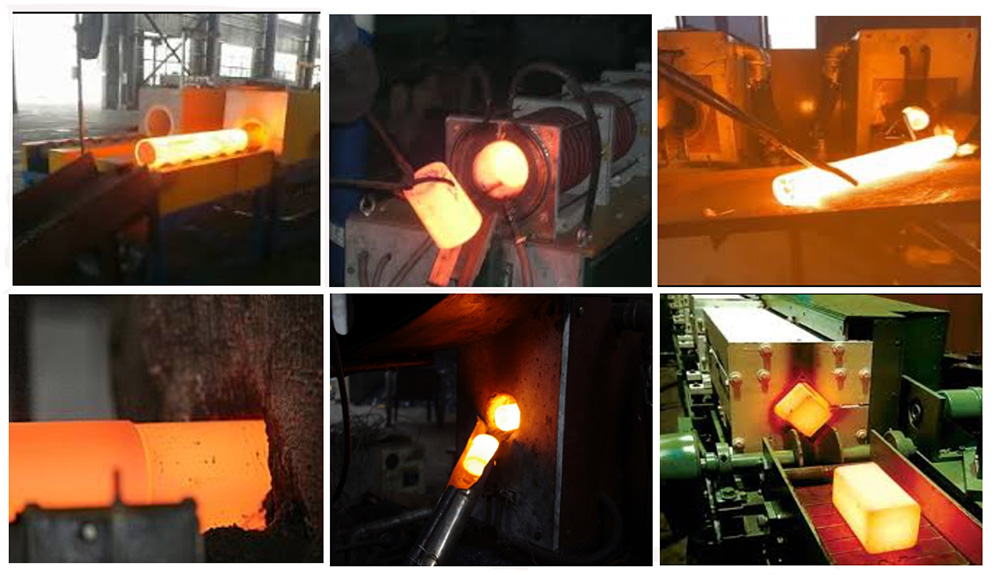
It is generally used for heating before forging and the heating temperature is 1200 degrees, while the heating temperature for tempering heating is generally within 1000 degrees. This intermediate frequency heating application determines that the heating principle of an intermediate frequency heating furnace is only for heating purposes and cannot melt metal.
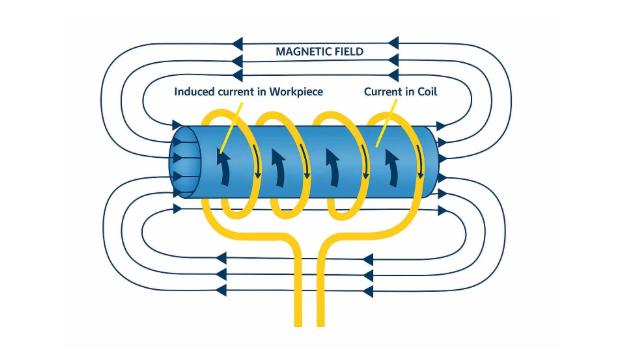
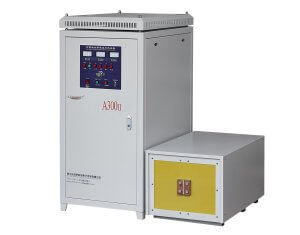
Intermediate frequency furnace is mainly composed of variable frequency device and induction coil, power frequency 50 Hz alternating current frequency conversion device would turn into intermediate frequency 100 Hz – 10000 Hz of alternating current, the three-phase alternating current into direct current (dc) after rectifying power frequency, and then laid adjustable intermediate frequency electric current, direct current supply by the capacitor and inductor in the flow of intermediate frequency alternating current, generate high-density magnetic field lines in the induction coil, induction coil, and cutting in cheng fang of metal materials, produce a lot of eddy current in the metal materials.
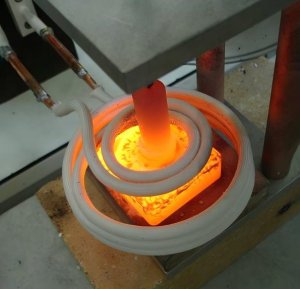
The frequency conversion device and induction coil of the intermediate frequency heating furnace make the heated metal material produce eddy current, which also has some properties of the intermediate frequency current, that is, the free electrons of the metal itself flow in the metal body with resistance to produce heat., for example, put a metal cylinder has alternating medium frequency current in the induction coil, the metal cylinder has no direct contact with an induction coil, electric coil temperature is very low, but the surfaces are heated to redness, and even melt, and the redness and melting speed as long as adjust the size and the strength of the current frequency can be achieved.
If the cylinder is placed in the center of the coil, the temperature around the cylinder is the same, and the heating and melting of the cylinder do not produce harmful gases or light pollution to the environment.
The frequency range is wide, from 1 kHz to 20 kHz, and the appropriate frequency can be selected according to the specific diameter of the heated workpiece.
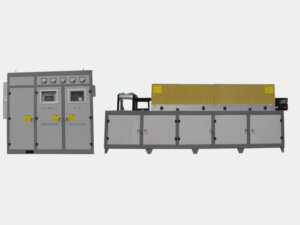
The induction coil is 500mm-1m long when the whole material is heated by medium frequency forging furnace, and multiple materials are heated at the same time, which further ensures the heat penetration effect.
The intermediate frequency forging furnace adopts continuous heating mode, and the load inside the induction coil is relatively balanced, which overcomes the huge change of the actual heating power of the equipment caused by the huge change of the load when the load of a singlebar rises from room temperature to 1100°C in the whole heating process, so that the actual power of the equipment can be guaranteed to be above 85% of the rated power value in the whole continuous heating process, and the equipment can be effectively utilized.
When heating nonferrous metals such as copper and aluminum, the actual power of the equipment can also reach more than 85% of the maximum power by reasonably designing the induction coil and capacitor, and the heating capacity can reach 3.5 kg/kW hour when heating copper.
Medical Device Components: Precision mechanical elements
These applications demonstrate the versatility of induction forging in producing components that require exceptional mechanical properties, dimensional accuracy, and reliability.
Do you need help with choosing our products?
Fill out this form to get in touch with us.
Ready to Upgrade Your Heating Process?
Get a customized induction heating solution tailored to your production needs. Our engineers will recommend the right equipment and help you get started.
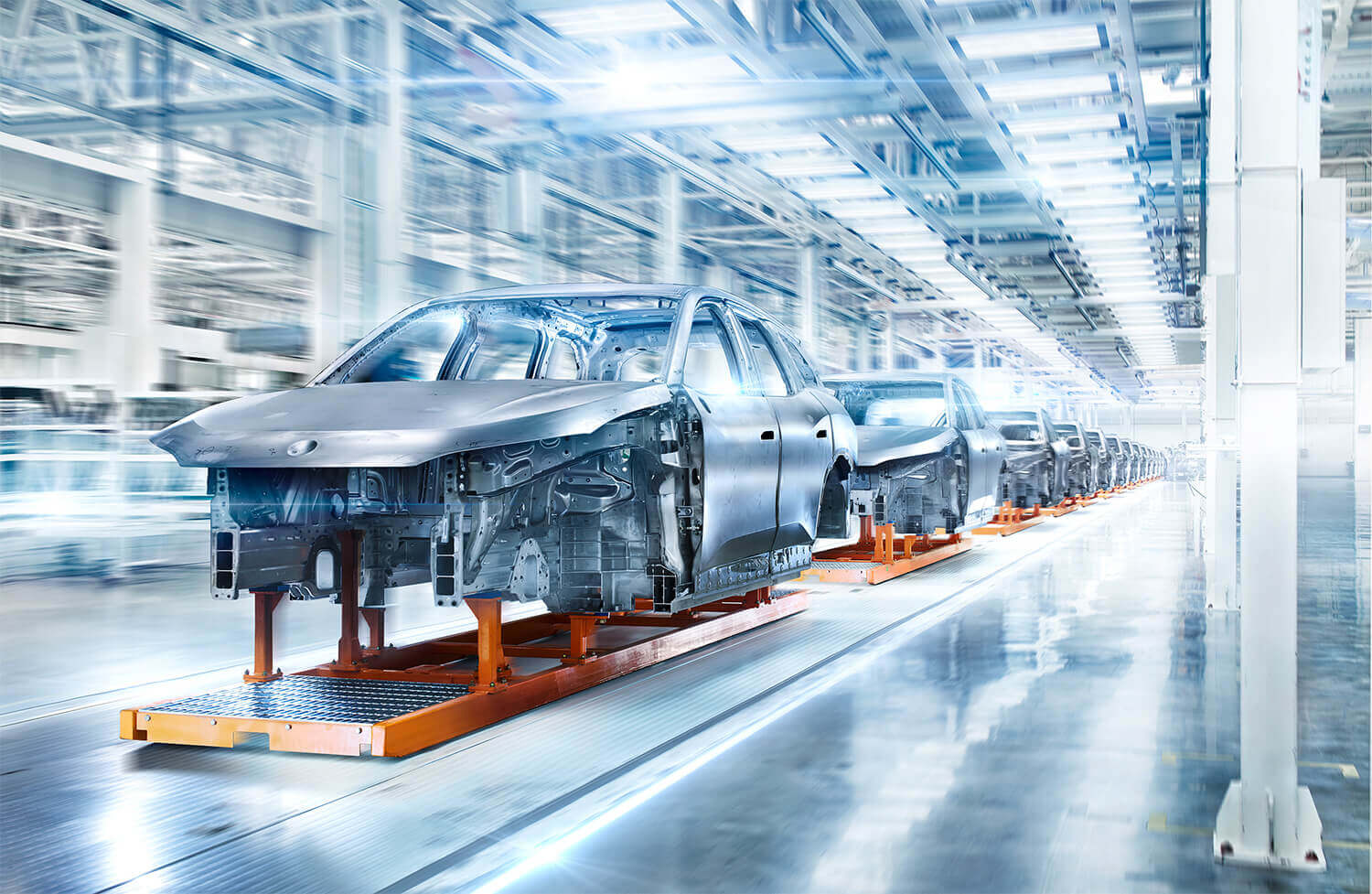
Introduction Induction heating is widely used in automotive manufacturing for heat treatment, brazing, forging and assembly applications. Compared with conventional heating methods, it offers precise temperature control, consistent results and improved production efficiency across a wide range of vehicle components.…
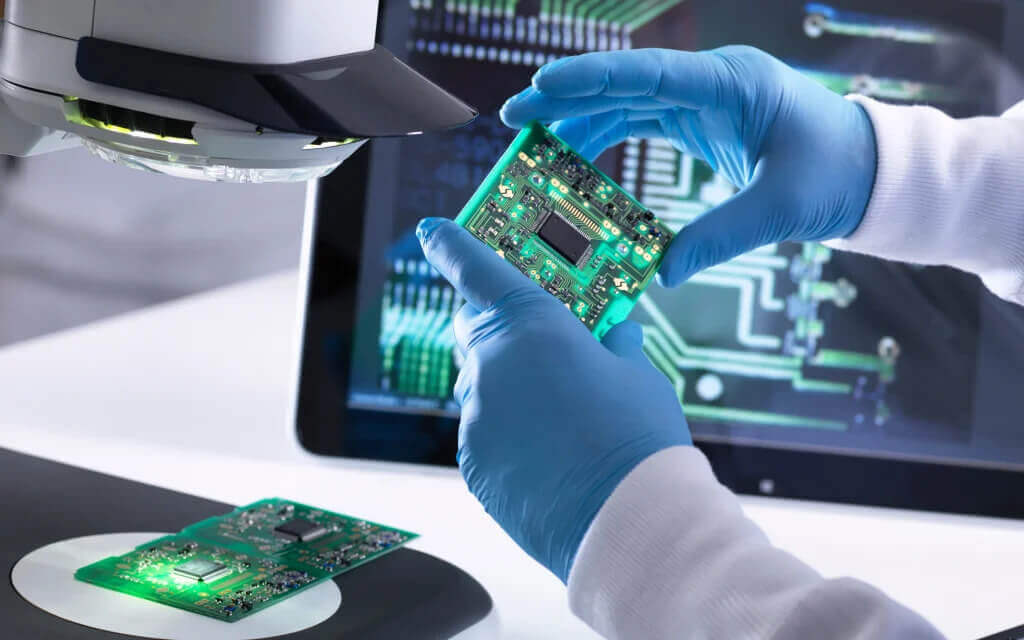
Introduction Medical device manufacturing requires precise, clean and repeatable thermal processing. Induction heating generates heat directly within electrically conductive components, allowing manufacturers to control the heated area, temperature and cycle time without direct flame contact. Compared with conventional flame or…
Introduction The packaging industry demands high-speed production, reliable sealing quality and strict hygiene standards. Induction heating offers a non-contact heating method that precisely heats conductive materials such as aluminum foil without overheating the container or packaged product. Compared with conventional…
Introduction Aerospace and defense manufacturers require exceptional process accuracy, material integrity and production consistency. Induction heating provides localized, controllable heating without open flames, making it ideal for manufacturing high-value components where dimensional accuracy and metallurgical quality are critical. Compared with…
Introduction Manufacturers of HVAC equipment, household appliances and electrical products require highly controlled heating processes to ensure reliable joints, long product life and efficient production. Induction heating provides localized, non-contact heating with excellent temperature control, making it ideal for high-volume…
Introduction The renewable energy industry continues to expand as demand grows for cleaner and more sustainable energy solutions. Manufacturing renewable energy equipment requires highly reliable thermal processing to ensure component strength, electrical performance and long-term durability. Induction heating provides localized,…
Introduction Mining and heavy industries demand robust equipment capable of operating in harsh environments with continuous heavy-duty workloads. Components such as gears, shafts, bearings, crusher parts and drilling tools require advanced thermal processing to maximize wear resistance and service life.…
Introduction Modern manufacturing demands high precision, consistent quality and efficient production processes. Conventional flame heating and furnace heating often introduce excessive heat, oxidation and long production cycles that reduce productivity. Induction heating delivers rapid, localized and repeatable heating without direct…