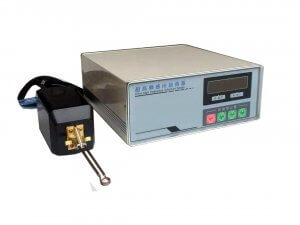
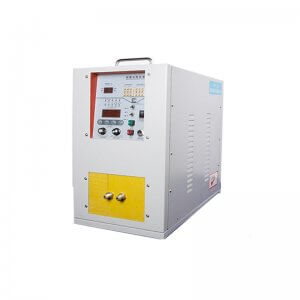
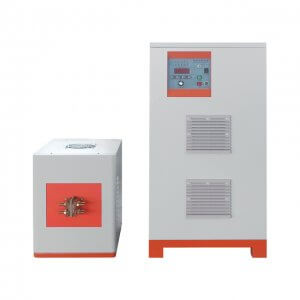
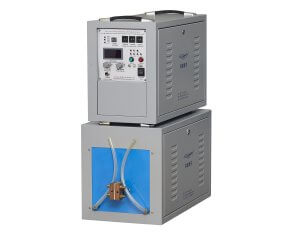
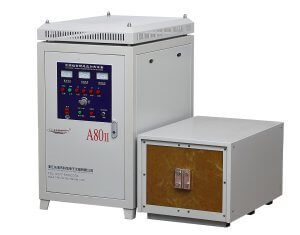
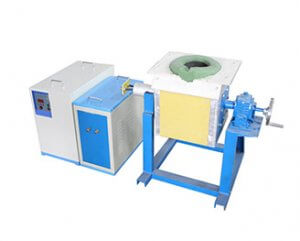
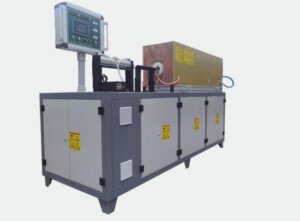
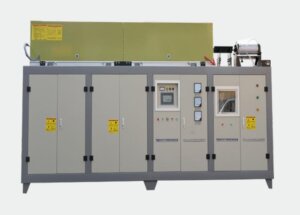
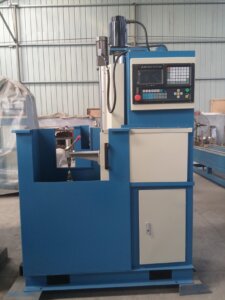
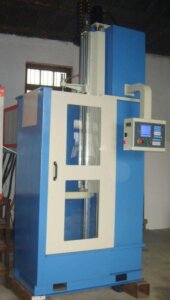
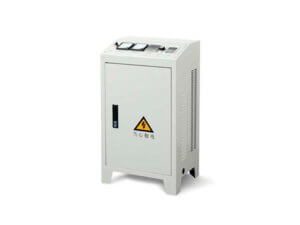
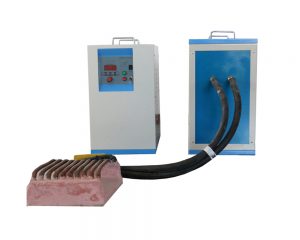
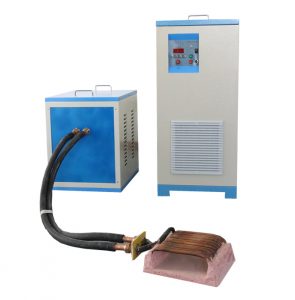
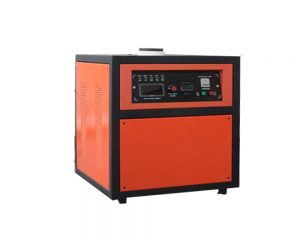
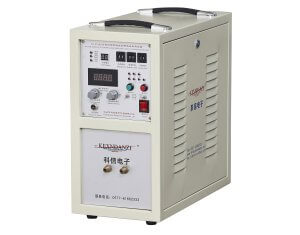
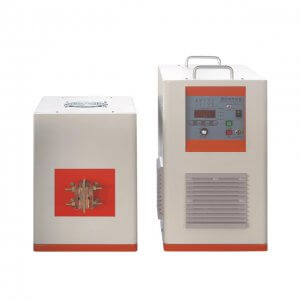
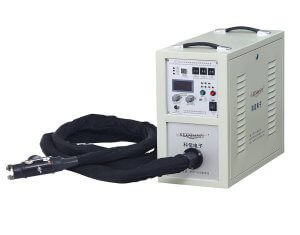
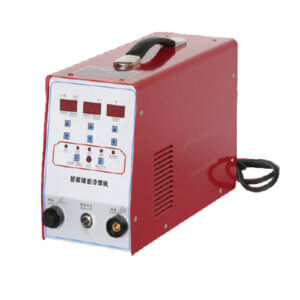
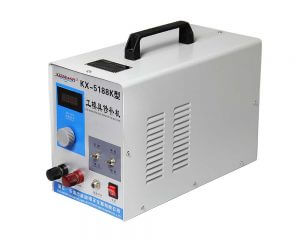
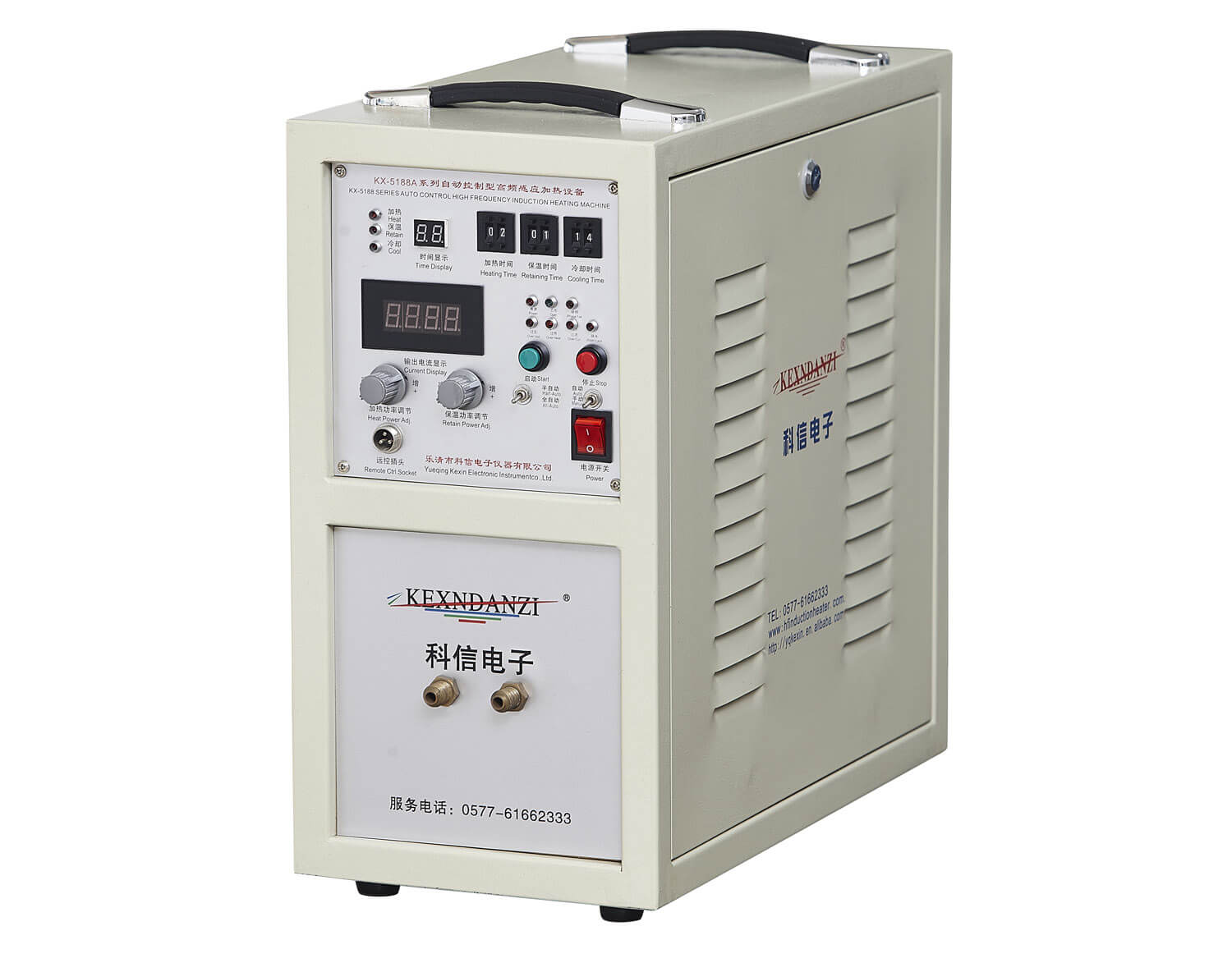
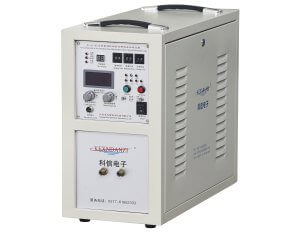
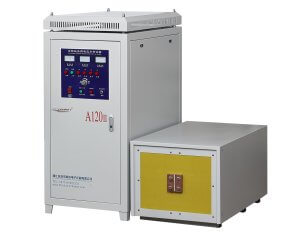
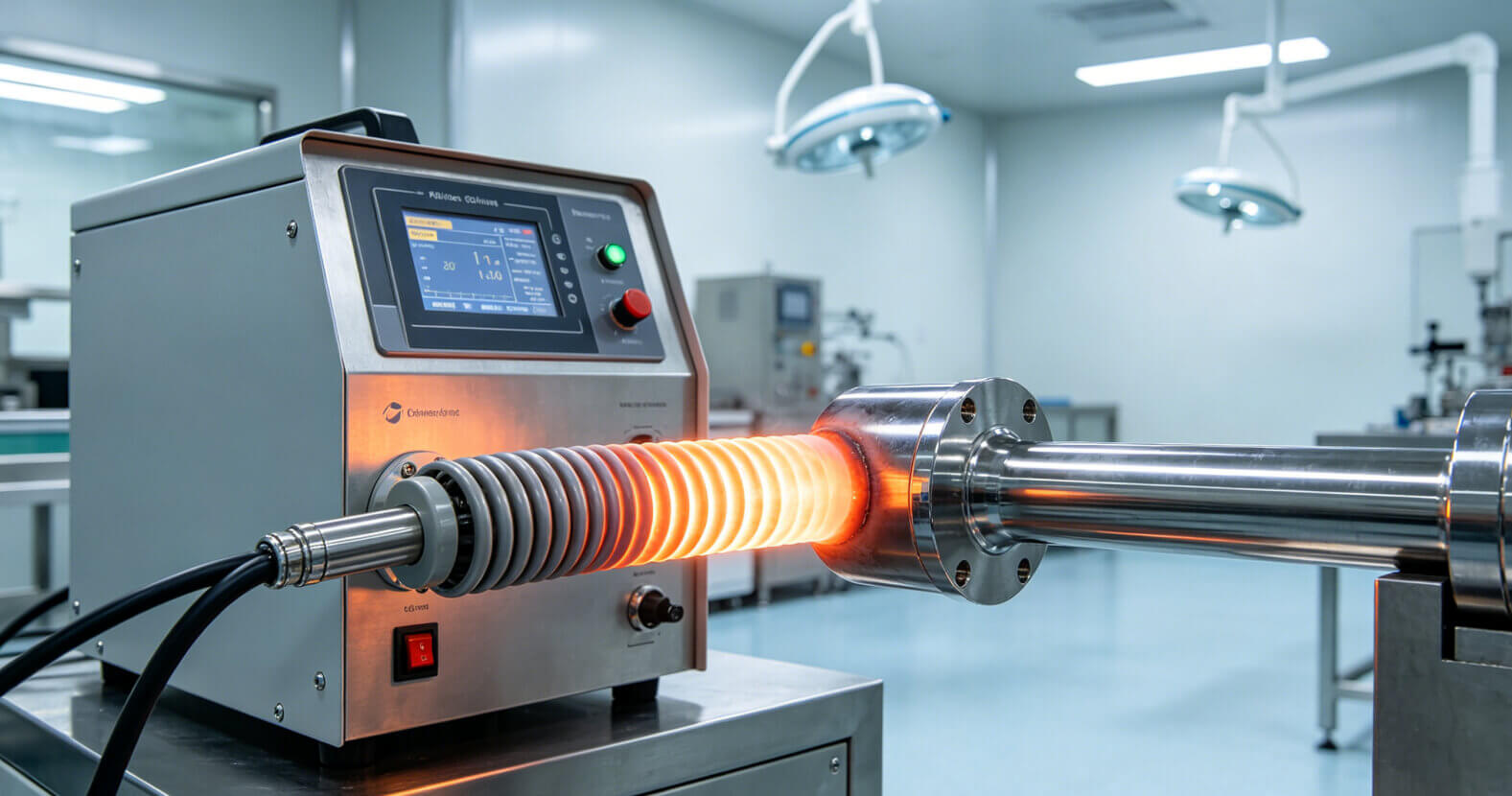
A high-frequency induction heating machine (18kW) is an industrial heating system that uses electromagnetic induction to rapidly heat metal. “18kW” refers to its rated power, meaning that the machine can deliver up to 18 kilowatts of high-frequency electrical energy to the workpiece.
This 18 kW high-frequency induction heater is a powerful, precision-driven induction heater designed for rapid, efficient, and reliable heating of metals in industrial, manufacturing, and mechanical environments.
Utilizing advanced high-frequency induction technology, the system provides localized electromagnetic heating suitable for applications such as quenching, brazing, welding, forging, heat treatment, and heat shrink assembly. It is ideal for professionals seeking superior performance and efficiency.
How Does a High-Frequency Induction Heating Machine Work?
High-frequency induction heating machines utilize electromagnetic induction to heat metal, providing rapid, precise, and non-contact heating for industrial applications such as metal quenching, brazing, welding, and heat shrink assembly.
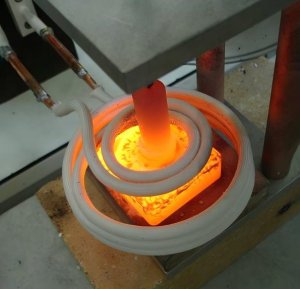
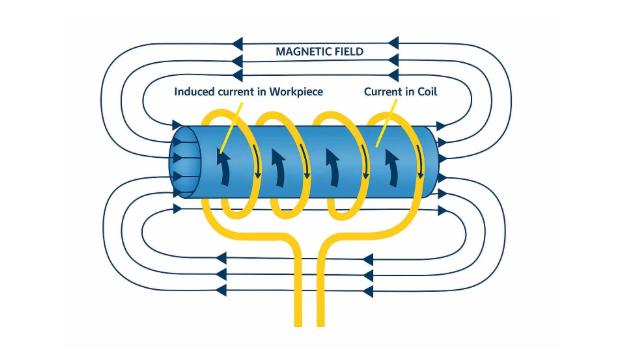
When a metal workpiece is placed inside an induction coil, a high-frequency alternating current flows through the coil, generating a rapidly changing magnetic field. This magnetic field induces eddy currents on the workpiece surface. These high-density eddy currents are directly converted into heat energy when they encounter the metal resistance.
Due to the skin effect, the induced current concentrates near the workpiece surface. The higher the operating frequency, the more concentrated the heat becomes in the surface layer; therefore, high-frequency induction heating is ideal for surface heating and precision heat treatment. By adjusting the frequency, operators can precisely control the heating depth and efficiency of induction heating.
Key Steps in the Induction Heating Process
AC Power Supply Drives the Inductor
The induction heater’s power source generates a high-frequency alternating current that flows through the induction coil.
Magnetic Field Is Created Around the Coil
The alternating current produces a changing magnetic field, which surrounds the induction coil and the workpiece.
Eddy Currents Form Inside the Metal Workpiece
As the magnetic field interacts with the workpiece, eddy currents are induced within the metal, producing localized heat.
Heat Is Generated at the Surface
Because of the skin effect, most heating occurs at or near the surface ,perfect for surface quenching, hardening, and precision heat treatment.
Adjustable Frequency Controls Heat Depth
By tuning the frequency of the induction power, operators can optimize how deep and how fast the heat penetrates, giving precise control over the metal heating process.
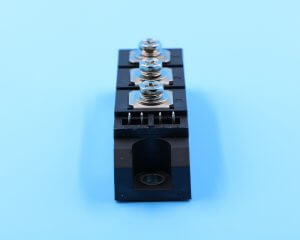
This high-frequency induction heating machine is equipped with Siemens Infineon IGBT modules, featuring high efficiency, fast response, and stable performance. Operating at 40–60 kHz, it provides excellent arc stability and achieves near-spatter-free heating and welding.
The system utilizes all-solid-state semiconductor power devices, imported transistor integrated modules, and high-speed control transistors to ensure precise and reliable power output. Japanese Nichicon electrolytic capacitors guarantee stable filtering and a long service life.
The signal, drive, and control circuits all use components from Toshiba, Hitachi, Motorola, and leading domestic manufacturers. With automatic frequency tracking, stepless power regulation, and comprehensive protection and alarm functions, the equipment achieves safe and reliable operation and clearly displays real-time status.
Standard export packing: inner cartons, outer wooden crates, with double-layer protection.
Ready to Upgrade Your Heating Process?
Get a customized induction heating solution tailored to your production needs. Our engineers will recommend the right equipment and help you get started.
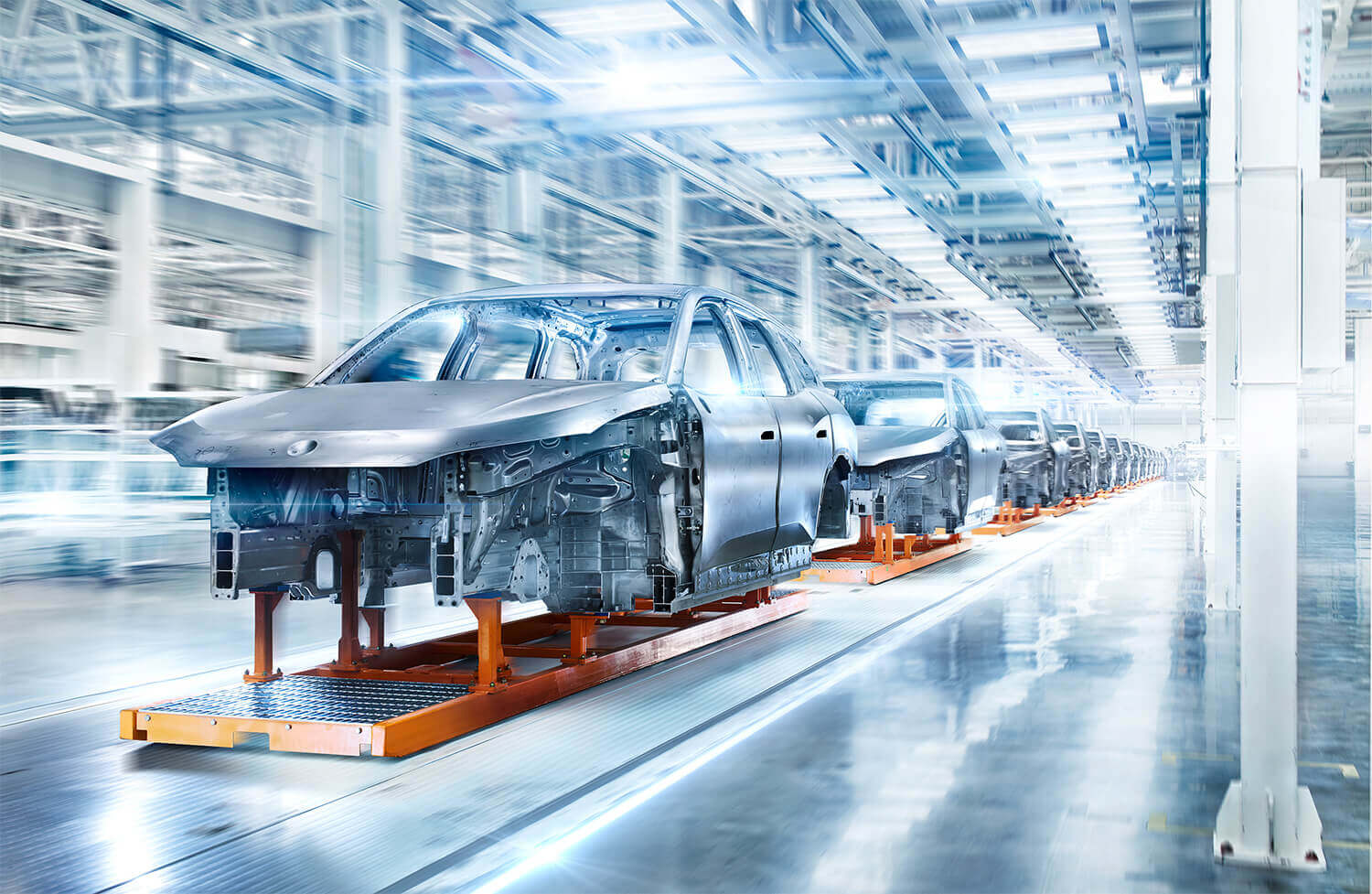
Introduction Induction heating is widely used in automotive manufacturing for heat treatment, brazing, forging and assembly applications. Compared with conventional heating methods, it offers precise temperature control, consistent results and improved production efficiency across a wide range of vehicle components.…
Introduction Medical device manufacturing requires precise, clean and repeatable thermal processing. Induction heating generates heat directly within electrically conductive components, allowing manufacturers to control the heated area, temperature and cycle time without direct flame contact. Compared with conventional flame or…
Introduction The packaging industry demands high-speed production, reliable sealing quality and strict hygiene standards. Induction heating offers a non-contact heating method that precisely heats conductive materials such as aluminum foil without overheating the container or packaged product. Compared with conventional…
Introduction Aerospace and defense manufacturers require exceptional process accuracy, material integrity and production consistency. Induction heating provides localized, controllable heating without open flames, making it ideal for manufacturing high-value components where dimensional accuracy and metallurgical quality are critical. Compared with…
Introduction Manufacturers of HVAC equipment, household appliances and electrical products require highly controlled heating processes to ensure reliable joints, long product life and efficient production. Induction heating provides localized, non-contact heating with excellent temperature control, making it ideal for high-volume…
Introduction The renewable energy industry continues to expand as demand grows for cleaner and more sustainable energy solutions. Manufacturing renewable energy equipment requires highly reliable thermal processing to ensure component strength, electrical performance and long-term durability. Induction heating provides localized,…
Introduction Mining and heavy industries demand robust equipment capable of operating in harsh environments with continuous heavy-duty workloads. Components such as gears, shafts, bearings, crusher parts and drilling tools require advanced thermal processing to maximize wear resistance and service life.…
Introduction Modern manufacturing demands high precision, consistent quality and efficient production processes. Conventional flame heating and furnace heating often introduce excessive heat, oxidation and long production cycles that reduce productivity. Induction heating delivers rapid, localized and repeatable heating without direct…