
- E-mail: yqkexin@gmail.com
-
Kexin Global


Induction Annealing: Process, Applications and Equipment Selection
Discover the induction annealing process for copper, brass & steel. Learn about its applications, key benefits over furnace annealing, and how to select the right equipment.
June 15, 2026
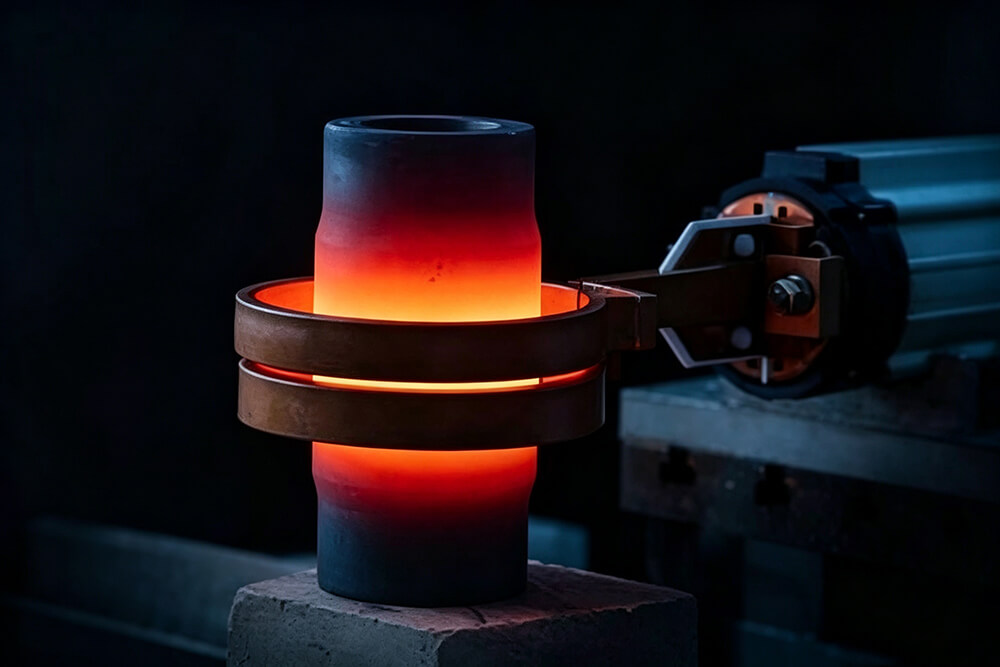
Cold working can gradually reduce a metal’s ductility, making further bending, forming, or drawing more difficult. Annealing is used to restore workability by heating the material under controlled conditions, allowing it to undergo further processing with less risk of cracking or excessive forming force.
This is common in applications such as copper tube bending, brass component forming, and steel wire drawing, where the material may need to be softened at a specific stage of production. Traditional furnace annealing can treat an entire batch or component, while induction heating can apply heat to a defined area without heating the whole part.
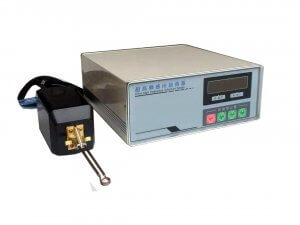
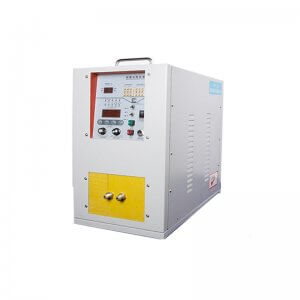
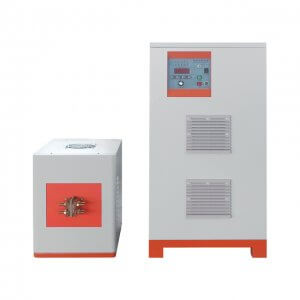
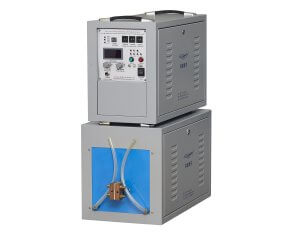
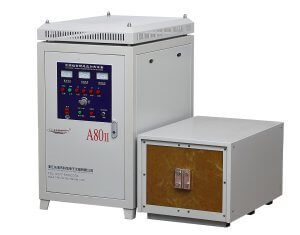
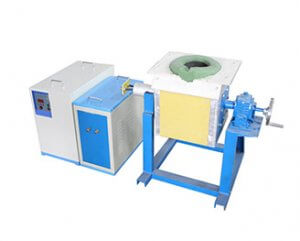
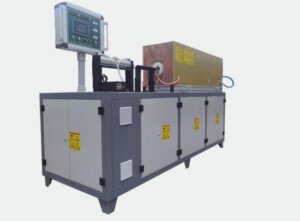
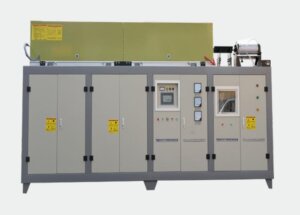
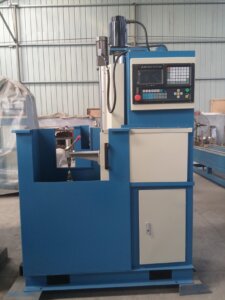
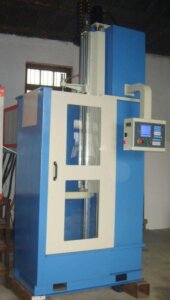
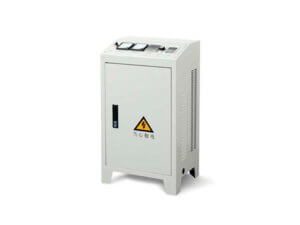
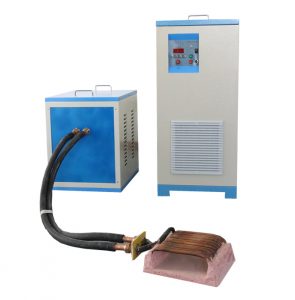
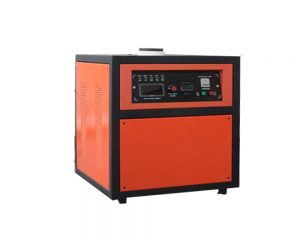
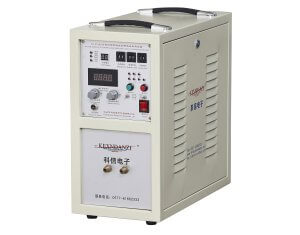
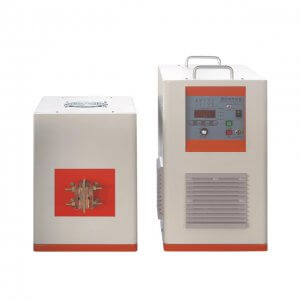
With the right coil design and process settings, induction annealing provides fast, repeatable heating that can be integrated directly into a production line. KEXIN supplies induction heating systems for a range of annealing applications.
This article looks at how the process works, where induction annealing is commonly used, and what to consider when selecting equipment for a particular application.
What Is Annealing?
Annealing is a heat treatment that softens metal and restores its formability. The metal is heated to a target temperature, held there long enough for its internal structure to relax, and then cooled in a controlled way. Above the recrystallization temperature, the strained and hardened grains reform into a softer, more ductile structure.
Cold work hardens metal. Bending, drawing, stamping, and rolling all deform the crystal structure and make the material harder and more brittle. Left that way, the metal cracks or resists the next forming step. Annealing reverses that, making the metal workable again.
The result matters to production: an annealed part forms cleanly, without cracking, and with far fewer rejects. Annealing is used on copper, brass, steel, and stainless steel, and it plays a part in everything from wire drawing to ammunition casings to tube bending.
Induction Annealing vs. Furnace Annealing
Annealing has been done in furnaces for centuries, and a furnace is still right for some jobs. Induction changes the economics for others.
| Heating Method | Heat Zone | Speed | Temperature Control | Best Suited To |
|---|---|---|---|---|
| Induction | Localized, targeted | Seconds to minutes | Precise, repeatable | Production parts, selective annealing, in-line work |
| Box furnace | Whole part or batch | 1-6 hours | Good, but slow | Large parts, annealing that must soak, batch work |
| Open flame | Localized | Fast | Poor | Field repairs, non-critical parts |
The biggest advantage of induction is that it heats only the zone that needs to be annealed. A furnace heats the whole part, which is slow and can soften areas that should stay hard. Induction puts the heat exactly where it is needed and leaves the rest of the part untouched.
Speed is the second advantage. A part that spends an hour in a furnace can be annealed in seconds in an induction cell, and the cycle time drops from hours to minutes. For a production line forming thousands of parts a day, that is the difference between meeting the target and missing it.
Repeatability is the third. Induction heating is controlled and consistent, so every part gets the same heat, the same time, and the same result. That consistency cuts rejects and protects the metallurgical properties that vary wildly with furnace heating.
How Induction Annealing Works
Induction annealing follows the same physics as all induction heating.
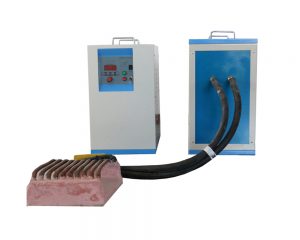
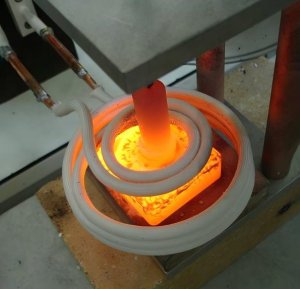
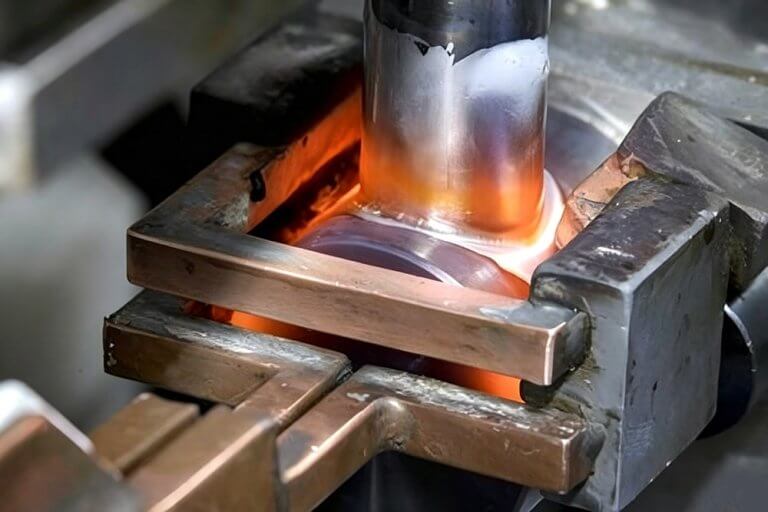
A work coil surrounds the part. Alternating current in the coil generates an electromagnetic field, which induces eddy currents in the conductive workpiece. The resistance of the metal turns those currents into heat, so the part heats from within.
Because the heat is generated in the part itself and controlled by the power supply, the operator can hit a precise target temperature and hold it. The coil shape controls the heated zone, so a wire running through a coil anneals its full length, while a flange set inside a coil anneals only the rim.
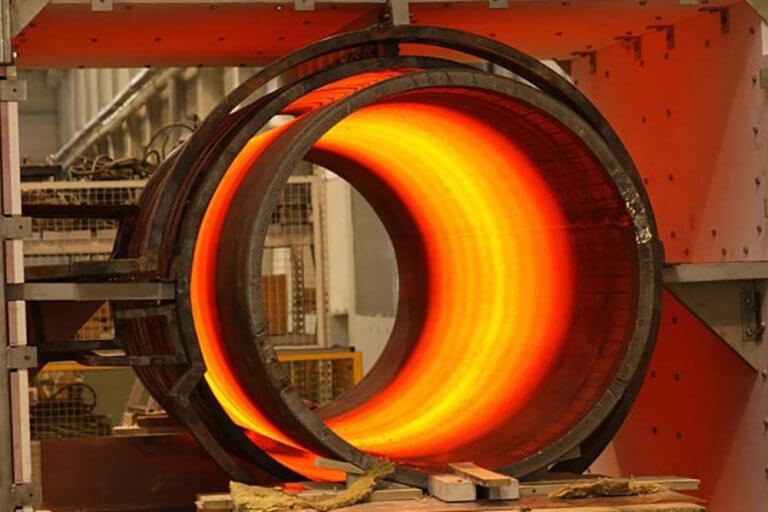
For most applications, the process is continuous. A tube feeds through a coil, is heated to the annealing temperature as it passes, and cools as it leaves. Cycle times are a few seconds per part or a few meters per minute on a continuous line.

Common Applications of Induction Annealing
Induction annealing shows up wherever metal must be softened for forming without a furnace’s time penalty.
-
Wire Drawing
Uses it to soften wire between stages, so the wire draws further without breaking. -
Tube and Pipe Bending
Anneals the bend zone so the tube forms without cracking or flattening. -
Brass and Copper Forming
Uses it on casings, fittings, and terminals that must bend or expand without splitting. -
Selective Steel Annealing
Steel parts that need a soft zone next to a hard zone anneal selectively, leaving the rest of the part in its original condition. -
Stainless Steel Components
Parts that must be formed, or that sit near a weld zone, are annealed locally to restore ductility.
In every case, the pattern is the same: anneal the zone that needs it, in seconds, without touching the rest of the part.
Controlling Temperature and Metallurgy
Annealing is a metallurgical process, and control is everything.
The target temperature is set by the material. Copper, brass, and steel each anneal at different temperatures, and going too high can melt thin sections or burn the surface, while too low leaves the part still hard.
Holding time matters as much as temperature. Some materials need a short hold at temperature to complete the recrystallization, and the power supply must hold the set point rather than overshoot it.
Cooling matters too. Some anneals, like copper, tolerate fast cooling. Others, like steel, need controlled cooling to reach the right final hardness. An induction system can be configured for the cooling profile the material needs.
The value of induction here is repeatability. Every part is heated to the same temperature for the same time, which means the same metallurgical result every cycle. That repeatability is what makes induction annealing a production tool rather than a lab technique.
Applications Better Suited to Furnace Annealing
Induction is not the answer to every annealing job, and knowing the exceptions avoids the wrong purchase.
- Very large parts that exceed coil capacity are better handled in a furnace.
- Parts that require a long soak at temperature, where the whole cross-section must reach the same temperature and stay there, suit a furnace better.
- Batch work with parts of many different shapes, run rarely, may not justify a dedicated induction cell.
For production annealing of parts that fit a coil, and where speed and repeatability matter, induction is the more efficient choice.

FAQ
What to Consider When Selecting an Induction Annealing System
An induction annealing system should be sized around the part, material, and production requirements. Part dimensions, target temperature, and required heating time all influence the power needed.
A thin wire, for example, has very different heating requirements from a thick-walled tube, while a continuous production line may require a different system configuration from a single-station process.
Coil design is equally important because the coil determines where and how efficiently energy is delivered to the workpiece. Its shape, size, and position need to match the part geometry and the area being annealed.
KEXIN supplies induction heating systems with application-specific coil design, installation support, and technical training.
Providing details such as the workpiece material and dimensions, target temperature, heating time, and production rate allows the system and coil to be configured around the actual process rather than simply specifying more power than the application requires.
Talk to Our Team
Induction annealing turns a slow furnace operation into a fast, repeatable production step, and it does it with a smaller footprint and less energy. Tell us the part, the material, the production rate, and the annealing temperature, and we will recommend an induction system sized for the job.
Contact KEXIN for a technical proposal, and our engineers will help you soften metal where and when you need it.
Related Articles
Explore News >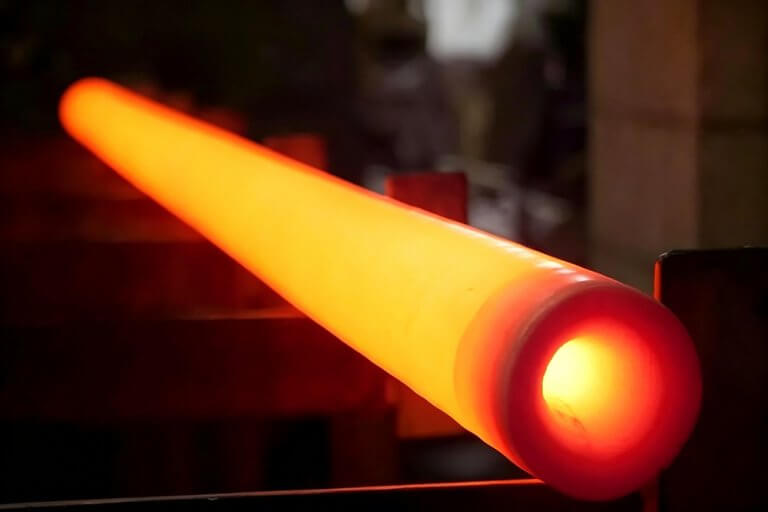
Request A Quote
Can't find the answer you need? Tell us about your application and our engineers will get back to you.