
- E-mail: yqkexin@gmail.com
-
Kexin Global
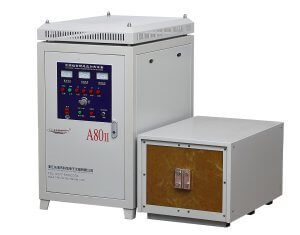
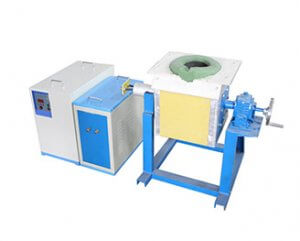
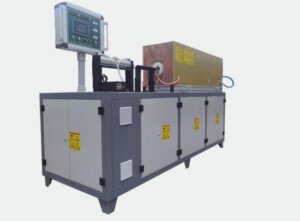
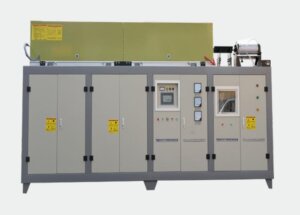


Differences Between UHF, HF, RF and MF Induction Heaters
Compare UHF, HF, RF, and MF induction heaters. Learn how to choose the right frequency range for your specific heating, melting, and hardening applications.
December 25, 2025
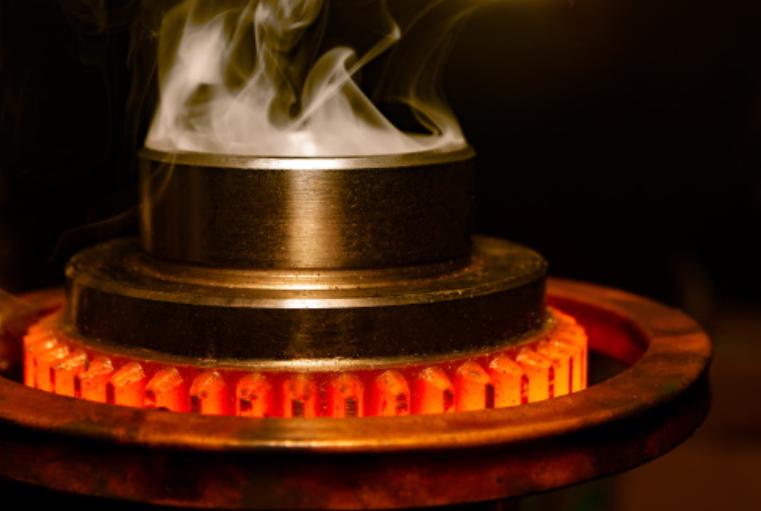
Induction heating is a highly efficient and economical heat treatment method for mechanical metal parts. It is widely used in industries such as automotive manufacturing, machinery production, and metal processing. Induction heating heat treatment is renowned for its energy-saving and rapid characteristics, significantly improving production efficiency.
Induction heating technology has revolutionized the way metals and conductive materials are heated in industrial applications. Its core principle is to generate heat within the workpiece using an electromagnetic field, without direct contact.
The key to achieving precise, efficient, and controllable heating lies in the frequency of the induction heater used, which is precisely where the significant differences lie between ultra-high frequency (UHF), high frequency (HF), radio frequency (RF), and medium frequency (MF) induction heaters.
In this guide, we will delve into the differences between these frequency ranges, how they affect performance, and how to choose the ideal induction heating system for your needs.
The Principle of Induction Heating Surface Hardening
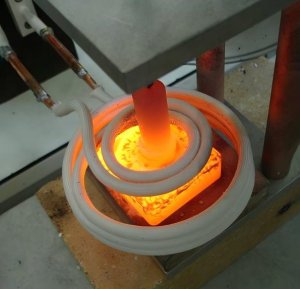
Induction hardening converts commercial frequency electrical energy into high-frequency alternating current, which generates a magnetic field through a coil.
A metal workpiece is placed inside this coil and subjected to the magnetic force of the alternating magnetic field. This induces an electromotive force in the material, thereby generating eddy currents within the part.
These eddy currents are strongest at the surface, causing the surface to heat up rapidly. The depth of this heating is crucial, as 86.5% of eddy current heating occurs at or near the workpiece surface.
Why is Frequency so Important?
The frequency of an induction heater directly affects:
- Deep heat penetration
- Heating rate
- Suitability for specific applications
- Energy efficiency
Higher frequencies tend to heat to points closer to the surface more quickly, while lower frequencies achieve deeper heat penetration, which is crucial for forging, melting, or deep hardening processes.
1. Ultra-High Frequency (UHF) Induction Heaters
- Frequency Range: Above approximately 100 kHz.
- Typical Power Supply: Advanced solid-state inverters, such as IGBTs or MOSFETs.
- Cooling Method: Typically water-cooled due to high energy density.
- Optimal Applications: Precision surface hardening, thin-wall heating, rapid localized heating.
UHF induction heaters operate at the highest effective induction heating frequencies, making them ideal for applications requiring extremely fast heating rates and very shallow penetration depths.
These systems are commonly used for:
- Precisely controlled surface hardening
- Quenching requiring only the outer layer
- Micro-brazing and precision forging
The higher frequencies allow the electromagnetic field to induce currents close to the workpiece surface, enabling rapid heating without overheating the core.
This is particularly important in heat treatment of automotive parts, tool hardening, and machining of parts requiring dimensional accuracy.
2. High Frequency (HF) Induction Heaters
- Frequency Range: Typically 30 kHz–100 kHz.
- Power Supply: Solid-state IGBT system.
- Cooling Method: Water-cooled or air-cooled options are available depending on the power rating.
- Optimal Applications: Brazing, annealing, melting small parts, and heat treatment.
High-frequency induction heaters represent the most widely used frequency range in industrial applications. They achieve a good balance between heat penetration and heating speed, making them suitable for a variety of manufacturing processes.
High-frequency heaters operate at frequencies higher than medium-frequency (MF) heaters but lower than ultra-high-frequency (UHF) heaters, and are therefore commonly used for:
- Metal brazing and welding
- Surface hardening
- Small forging operations
- Annealing and heat treatment of shafts, gears, or fasteners
High-frequency systems enable rapid heating and precise control of heating modes, allowing manufacturers to optimize cycle times and improve part quality in a variety of applications.
3. Radio Frequency (RF) Induction Heaters
- Frequency Range: Approximately 20 kHz–80 kHz.
- Optimal Applications: General heat treatment, welding, brazing, and forging.
RF induction heaters utilize the lower radio frequency range within the induction range. While its frequency band overlaps with high frequency (HF) in some respects, RF equipment is generally optimized for a wider range of heating tasks where uniform heating and flexibility are more important than ultra-fine surface precision. Applications of RF induction systems include:
- Hardening of medium-sized parts
- General welding and brazing
- Preheating before forging
- Annealing operations
RF systems fall between high frequency (HF) and intermediate frequency (MF) in terms of heating penetration depth and control, making them ideal for applications requiring variable depth heating without extremely high surface precision.
4. Intermediate Frequency (MF) Induction Heaters
- Frequency range: Approximately 5 kHz–20 kHz.
- Power supply: IGBT or SCR power supply.
- Cooling method: Typically air or water cooling, depending on system power.
- Optimal applications: Deep heat penetration operations, large workpieces, forging and melting furnaces.
Intermediate frequency induction heaters operate at frequencies significantly lower than HF and UHF systems.
Low-frequency induction allows electromagnetic energy to penetrate deeper into the workpiece, making medium-frequency systems ideal for:
- Forging large shafts or billets
- Deep hardening and quenching
- Induction melting furnaces
- Heat treatment of large parts requiring uniform heat distribution
Due to their greater penetration depth, medium-frequency systems are not designed for rapid surface heating, but rather for powerful heating of the entire workpiece or core material.
These heaters are commonly used in heavy industrial applications such as large forging presses, melting furnaces, and deep hardening production lines.

Comparative Table of Frequency Ranges and Characteristics
| Type | UHF(Ultra-high Frequency) | HF(high Frequency) | RF(Radio Frequency) | MF(Medium Frequency) |
| Frequency | >=100 KHz | 30KHz~100KHz | 20KHz~80KHz | 5KHz~20KHz |
| Based | IGBT or MOSFET or SiC | IGBT | IGBT | IGBT or SCR |
| Cooled Type | Water | Water or Air | Water or Air | Water or Air |
| Application Description | Ultra-high frequency induction heaters are often used for quenching or hardening work, higher output frequency will bring thinner hardening depth and faster heating speed (some applications need 0.1mm~2mm hardening depth, then only ultra-high frequency machines can satisfy these works). | High frequency induction heaters are often used for brazing, jointing, normal quenching or small forging work. | Radio frequency induction heaters are often used for hardening, brazing, welding, normal quenching, forging and forging work. | Medium frequency induction heaters are often used for forging or melting or big depth quenching work. |
Key Differences Between UHF, HF, RF, and MF Induction Heaters
While induction heating is widely used for various metal treatment processes, different frequency ranges offer specific benefits for different applications:
UHF (Ultra High Frequency): Typically used for precision heating in specialized industries, UHF provides deep penetration and localized heating, ideal for thin or small parts.
HF (High Frequency): Ideal for surface hardening, HF induction is commonly used in automotive and metalworking industries for fast, efficient heat treatment.
RF (Radio Frequency): RF heating is commonly applied for more uniform heating and is effective in applications requiring medium to deep penetration for heating.
MF (Medium Frequency): Used for deep heating in large or thick parts, MF induction heating offers good control over heating depth and power efficiency.
Understanding these distinctions allows manufacturers to select the right induction heating method to match their specific heat treatment needs.
IGBT VS MOSFET
IGBT is an abbreviation for Insulated Gate Bipolar Transistor. Traditional bipolar power transistors have high voltage and low voltage drop characteristics, but their switching speed is slow, making them unsuitable for high-frequency applications. While power MOSFETs offer fast switching speeds, their breakdown voltage and current capacity are relatively small.
IGBTs combine the high-voltage bipolar power transistor’s on-state voltage drop characteristics with the switching speed characteristics of power MOSFETs, making them suitable for high-power applications and one of the most widely used power electronic devices.
How to Choose the Right Induction Heater?
Whether you choose an induction heater for surface hardening, brazing, melting, or forging, selecting the appropriate frequency range is crucial:
For Precision and Speed
If your process requires rapid, shallow heating with precise control, choose an ultra-high frequency (UHF) induction heater.
Suitable for General Industrial Heat Treatment
High frequency (HF) systems offer flexibility and efficient heating performance, making them ideal for a wide range of metalworking applications.
For Broad and Flexible Heating
If you require multiple heat treatment processes, not just surface finishing, then radio frequency (RF) induction heaters are the right choice.
For Deep and Heavy-Duty Heating
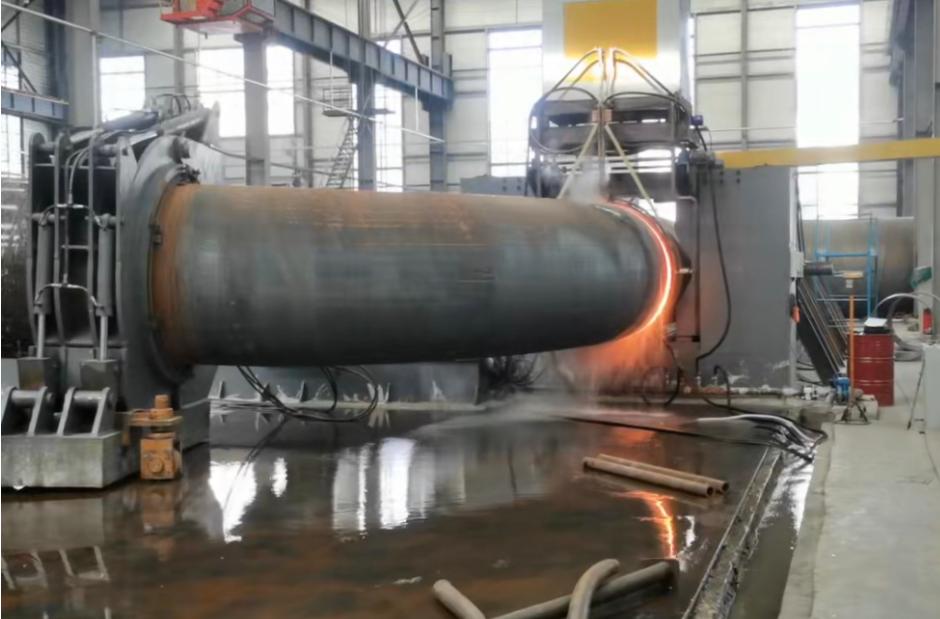
Medium frequency (MF) induction heaters provide excellent penetration for large workpieces and are ideal for forging, melting furnaces, and deep hardening.
Conclusion
Understanding the differences between ultra-high frequency (UHF), high frequency (HF), radio frequency (RF), and medium frequency (MF) induction heaters helps manufacturers and engineers select the most efficient induction heating system for their process requirements.
By choosing the appropriate frequency, induction heating can increase throughput, improve product quality, reduce energy consumption, and solve complex heating challenges across various industrial sectors.
Kexin specializes in precision laboratory equipment and industrial heating solutions. Whether you need rapid surface hardening or deep, uniform heating of large components, our experts can help you select the ideal frequency and system to achieve your specific metallurgical goals.
Contact us today to discuss your project needs and learn how our tailored solutions can enhance your efficiency and results.
Related Articles
Explore News >
Request A Quote
Can't find the answer you need? Tell us about your application and our engineers will get back to you.