
- E-mail: yqkexin@gmail.com
-
Prinova Global
News
Understanding High-Frequency Induction Heaters and Their Working Principles
In this guide, we’ll explore the fundamentals of induction heating, compare medium-frequency and high-frequency induction heaters, and explain how to choose the best induction heating power supply for your specific application.
October 23, 2025

Induction heating is one of the most efficient, precise, and clean methods for heating metals. Instead of relying on direct contact or open flames, it uses electromagnetic induction to heat materials from within — making it faster, safer, and more energy-efficient than conventional heating methods.
In this guide, we’ll explore the fundamentals of induction heating, compare medium-frequency and high-frequency induction heaters, and explain how to choose the best induction heating power supply for your specific application.
The Basic Theory of Induction Heating
Induction heating works on the principle of electromagnetic induction, where an alternating current (AC) passes through a coil, creating a magnetic field. When a conductive metal object is placed inside or near this coil, the magnetic field induces electrical currents—called eddy currents—within the material.
The resistance of the metal to these currents produces Joule heat, while hysteresis loss (in magnetic materials) adds additional heat due to the repeated magnetisation and demagnetisation of the material.
In short:
- Eddy current loss converts electromagnetic energy into heat within the metal.
- Hysteresis loss generates heat in ferromagnetic materials through magnetic friction.
By combining these two effects, induction heating systems can achieve rapid, localized, and highly controllable heating without physical contact.

Differences Between Medium- and High-Frequency Induction Heating Equipment
Induction heating is used in various industries such as automotive, aerospace, and metal fabrication — for hardening, brazing, forging, and annealing applications. The performance and efficiency of these processes depend largely on the frequency of the induction heating equipment used.
The key difference between medium-frequency and high-frequency induction heaters lies in heating depth and speed. Frequency determines how deeply heat penetrates the material and how quickly it reaches the desired temperature.
High-Frequency Induction Heating: Precision and Speed
High-frequency induction heating systems typically operate between 60 kHz and 200 kHz. This high frequency limits the depth of the induced current, concentrating heat on the surface of the material.
Key Characteristics of High-Frequency Induction Heating
- Shallow Heat Penetration: The higher frequency confines heat near the surface, ideal for applications like surface hardening, brazing, and soldering.
- Rapid Heating: Short heating cycles reduce production time and energy consumption, improving productivity.
- Perfect for Small Components: Well-suited for precision parts such as small gears, bearings, shafts, and fasteners.
- High Process Control: The quick thermal response allows accurate temperature regulation and consistent results.
Explore a 260 kW high-frequency bearing induction heater
Typical Applications:
- Surface hardening of gears and tools
- Brazing small metal joints
- Shrink fitting and annealing of thin components
- Heat treatment of precision mechanical parts
Because high-frequency systems focus on surface heating, they are often chosen when speed and surface quality matter more than deep heat penetration.
Medium-Frequency Induction Heating: Deep and Uniform Heating
Medium-frequency induction heating systems operate within the 1 kHz to 10 kHz range. The lower frequency allows magnetic fields to penetrate deeper into the material, producing uniform heating throughout the workpiece.
Key Characteristics of Medium-Frequency Induction Heating
- Deep Heat Penetration: Ideal for heating thicker or larger metal parts that require even temperature distribution.
- Suitable for Large Workpieces: Commonly used for shafts, pipes, rods, and large gear components.
- Uniform Heating: Reduces the risk of thermal stress and material distortion, ensuring consistent metallurgical properties.
- Versatility: Excellent for tempering, annealing, forging, and preheating processes.
Typical Applications:
- Forging and melting operations
- Annealing of thick bars or pipes
- Deep hardening of structural parts
- Preheating before welding or forming
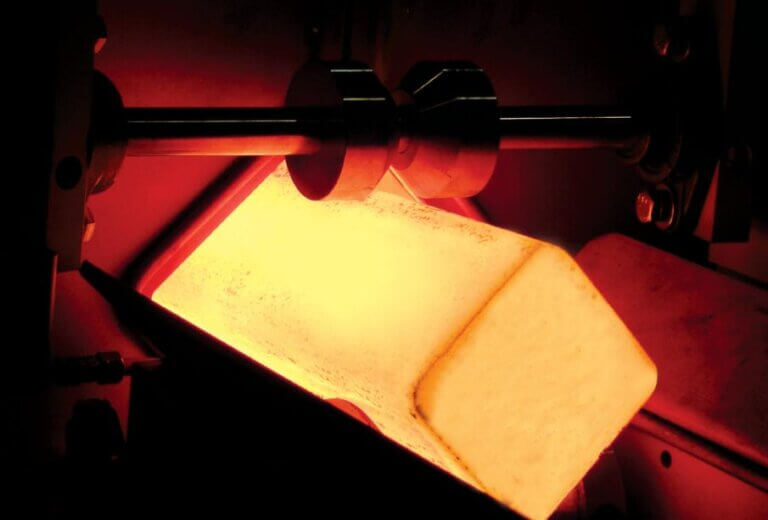
Compared to high-frequency systems, medium-frequency induction heaters provide slower but more even heating, making them indispensable for heavy-duty industrial processes.
Comparing Medium- vs. High-Frequency Systems
| Feature | High-Frequency | Medium-Frequency |
| Frequency Range | 60–200 kHz | 1–10 kHz |
| Heat Penetration | Shallow (surface heating) | Deep (core heating) |
| Heating Speed | Very fast | Moderate |
| Workpiece Size | Small or thin | Large or thick |
| Common Applications | Brazing, surface hardening | Forging, annealing, tempering |
In summary:
Choose high-frequency systems when you need surface treatment and fast heating, and medium-frequency systems when you require deep, uniform heating of larger components.

Choosing the Right Induction Heating Power Supply
Selecting the appropriate induction power supply is critical for achieving the desired performance, efficiency, and durability of your system.
1. Evaluate Key Parameters
Start by assessing:
- Power requirements: determine output power based on workpiece size and heating speed.
- Frequency range: high for surface heating, low for deep heating.
- Heating duration and temperature: define temperature profiles to match your process needs.
- Voltage and current capacity: ensure compatibility with your existing setup.
For processes that demand precise control, choose systems with digital monitoring and temperature regulation features.
2. Match the Power Supply to Your Application
Each material and process has unique needs:
- Conductive materials (like copper or steel) heat efficiently.
- Magnetic materials (like iron) heat faster due to magnetic hysteresis.
- Non-conductive materials require a conductive susceptor for energy transfer.
For example:
Small precision parts or surface brazing → High-frequency system.
Thick bars, forgings, or deep annealing → Medium-frequency system.
The size, shape, and material composition of your workpiece should always guide the frequency and power level you choose.
3. Optimize Coil Design and Cooling
The induction coil is essential for energy efficiency. Choose a coil that matches the geometry of your workpiece:
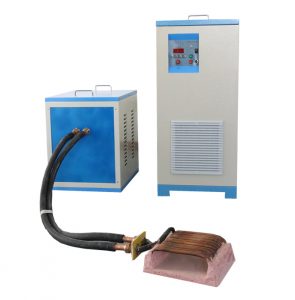
- Use flexible coils for irregularly shaped components.
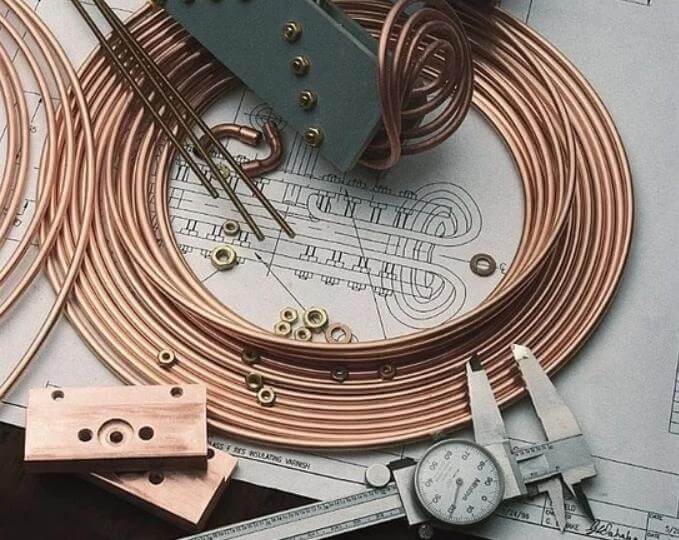
- Employ water-cooled copper coils to prevent overheating.
- Ensure the coil spacing and turns are optimized for maximum coupling efficiency.
Proper coil design not only enhances heating performance but also extends the life of the power supply.
4. Prioritize Safety and Automation
Modern induction heating equipment offers built-in safety features such as:
- Emergency stop controls
- Temperature and current monitoring
- Automatic overload protection
For automated production lines, select a power supply that integrates seamlessly with CNC systems or PLC controls, enabling consistent and repeatable results.
Practical Tips for Selecting an Induction Heating System
- Always test your materials under actual working conditions before purchase.
- Partner with a manufacturer that offers application testing and customization.
- Regularly maintain your system by inspecting cooling lines and cleaning components.
- Optimize coil placement and workpiece distance for maximum heating efficiency.
By understanding your process requirements and consulting experts, you can significantly improve energy efficiency, throughput, and process stability.
Conclusion
Selecting between medium-frequency and high-frequency induction heating systems depends on your application requirements.
High-frequency induction heaters are best for surface hardening, brazing, and small precision components.
Medium-frequency systems deliver deep, uniform heating ideal for forging, annealing, and large workpieces.
By carefully evaluating factors like frequency, power, and coil design, you can optimize your induction heating process for efficiency, quality, and cost savings.
Induction heating continues to transform modern manufacturing by providing clean, fast, and precise heating solutions—making it the preferred technology for industries worldwide.
Related Articles
Explore News >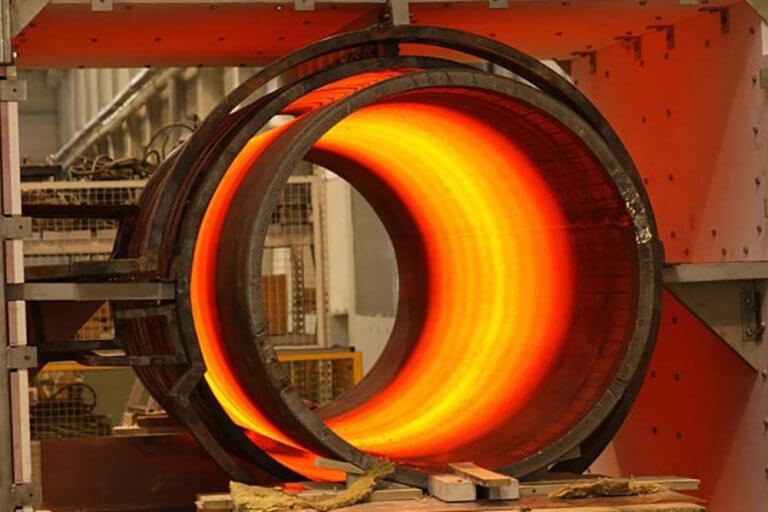
Request A Quote
Can't find the answer you need? Tell us about your application and our engineers will get back to you.