
 Whatsapp


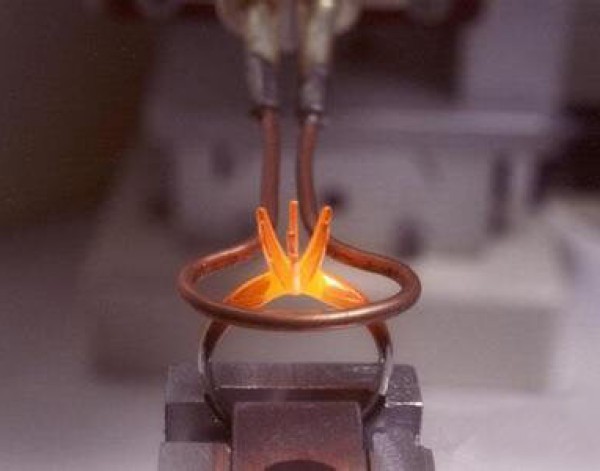


High Frequency Induction Heating Machine 18KW
A high-frequency induction heating machine (18kW) is an industrial heating system that uses electromagnetic induction to rapidly heat metal. “18kW” refers to its rated power, meaning that the machine can deliver up to 18 kilowatts of high-frequency electrical energy to the workpiece.
Model: KX-5188A18
Rated Power Output: 18KW
Frequency Range: 10-200KHz
PRODUCT DETAILS
This 18 kW high-frequency induction heater is a powerful, precision-driven induction heater designed for rapid, efficient, and reliable heating of metals in industrial, manufacturing, and mechanical environments.
Utilizing advanced high-frequency induction technology, the system provides localized electromagnetic heating suitable for applications such as quenching, brazing, welding, forging, heat treatment, and heat shrink assembly. It is ideal for professionals seeking superior performance and efficiency.
| 18KW High Frequency Induction Heating Machine | |
| Model | KX-5188A18 |
| Rated Power Output | 18KW |
| Frequency Range | 100-200KHz |
| Single Phase Input | One Phase 220V/50Hz |
| Current Range | One Phase 2-40A |
| Volume (mm³) | 550*250*500 |
| Net Weight | 28KG |
| Gross Weight | 40KG |
| Cooling Water Flow | Hydraulic Pressure≧0.2MPa;Flow Rate: 5-20L/Min |
| Cooling Water Temperature | ≤40℃ |
| Water Connection | 1 inlet and 1 outlet |
| Packing Method | Wooden Box |

How Does a High-Frequency Induction Heating Machine Work?
High-frequency induction heating machines utilize electromagnetic induction to heat metal, providing rapid, precise, and non-contact heating for industrial applications such as metal quenching, brazing, welding, and heat shrink assembly.
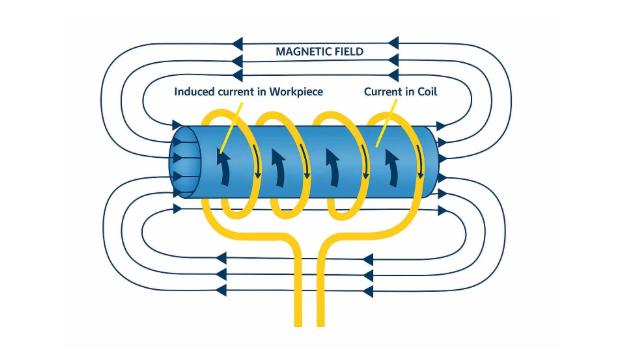
When a metal workpiece is placed inside an induction coil, a high-frequency alternating current flows through the coil, generating a rapidly changing magnetic field. This magnetic field induces eddy currents on the workpiece surface. These high-density eddy currents are directly converted into heat energy when they encounter the metal resistance.
Due to the skin effect, the induced current concentrates near the workpiece surface. The higher the operating frequency, the more concentrated the heat becomes in the surface layer; therefore, high-frequency induction heating is ideal for surface heating and precision heat treatment. By adjusting the frequency, operators can precisely control the heating depth and efficiency of induction heating.
Key Steps in the Induction Heating Process
AC Power Supply Drives the Inductor
The induction heater’s power source generates a high-frequency alternating current that flows through the induction coil.
Magnetic Field Is Created Around the Coil
The alternating current produces a changing magnetic field, which surrounds the induction coil and the workpiece.
Eddy Currents Form Inside the Metal Workpiece
As the magnetic field interacts with the workpiece, eddy currents are induced within the metal, producing localized heat.
Heat Is Generated at the Surface
Because of the skin effect, most heating occurs at or near the surface ,perfect for surface quenching, hardening, and precision heat treatment.
Adjustable Frequency Controls Heat Depth
By tuning the frequency of the induction power, operators can optimize how deep and how fast the heat penetrates, giving precise control over the metal heating process.
Advanced IGBT Power Control System
This high-frequency induction heating machine is equipped with Siemens Infineon IGBT modules, featuring high efficiency, fast response, and stable performance. Operating at 40–60 kHz, it provides excellent arc stability and achieves near-spatter-free heating and welding.
The system utilizes all-solid-state semiconductor power devices, imported transistor integrated modules, and high-speed control transistors to ensure precise and reliable power output. Japanese Nichicon electrolytic capacitors guarantee stable filtering and a long service life.
The signal, drive, and control circuits all use components from Toshiba, Hitachi, Motorola, and leading domestic manufacturers. With automatic frequency tracking, stepless power regulation, and comprehensive protection and alarm functions, the equipment achieves safe and reliable operation and clearly displays real-time status.
This industrial induction heater excels across a wide spectrum of metal processing tasks:
Heat Treatment & Hardening: Ideal for metal hardening, quenching, and annealing of gears, shafts, fasteners, bearings, and structural parts.
Induction Welding & Brazing: Perfect for precise welding, brazing, and soldering of steel, copper alloys, and various ferrous/non-ferrous materials.
Forging & Forming: Provides fast, uniform heating for hot forging, bending, and shaping processes.
Shrink Fitting & Assembly: Efficiently heats components for press fits and assembly lines.
Standard export packing: inner cartons, outer wooden crates, with double-layer protection.

Advantages of High Frequency Induction Heating Machines
A high frequency induction heating machine offers fast, precise, and energy-efficient metal heating, making it an ideal solution for modern industrial heat treatment applications.
1. Fast Heating Speed & Reduced Oxidation
High frequency induction heating delivers rapid and uniform heating, significantly reducing processing time. Unlike conventional heat treatment methods, it prevents excessive oxidation and thick oxide layers caused by prolonged heating cycles.
2. Precise & Localized Heating Control
An induction heating machine allows accurate control of the heating area. Only the required section of the workpiece is heated, while surrounding areas remain unaffected. This makes it ideal for special or complex workpieces that demand localized heat treatment.
3. Safe & Easy Operation
High frequency induction heaters are designed for simple and safe operation. With no open flame, no direct contact heating, and no exposed high temperatures, the system provides a safer working environment compared to traditional heating equipment.
4. Compact, Portable & Space-Saving Design
Induction metal heaters feature a compact structure and lightweight design, requiring minimal factory floor space. Many models are portable, allowing flexible positioning and easy integration into different production lines.
5. Energy-Efficient & Environmentally Friendly
By converting electrical energy directly into heat within the metal, induction heating machines achieve high energy efficiency, reduced power consumption, and a cleaner production process with lower emissions.
RELATED QUESTIONS
Can you heat glass or ceramics with induction?
If you work with glass or ceramics by induction heater, a compact vacuum furnace is a great solution for induction heating. You’ll get quick, clean heat with very precise temperature control.
What makes up a typical induction heating system?
A typical induction heating system consists of the induction heating power supply, an induction heating coil and a water-cooling source and several internal components inside the power supply. The induction heating power supply sends alternating current through the induction coil, thus generating a magnetic field. Hence place a work piece within the coil and enters the magnetic field, then it induces eddy currents within the workpiece. Furtherly it’s generating precise and localized heat without any physical contact between the induction coil and the work piece
Will induction heating increase my utility bills?
Not likely. Induction heating is a very effective, efficient means of heating. Most of our customers who are switching to induction heating machine for the first time see their utility bills go down.
What are typical utility requirements for induction?
Of course it depends on the system, but a typical system requires 380, 3-phase VAC at 50 Hz and 30 Amps. Also figure on 80 PSI compressed air and 40 PSI water at 4 gallons per minute for cooling
Is this joint suitable for induction brazing?
Our team of metallurgical and mechanical engineers will be glad to have a look at your parts and process and give you our best advice for choosing the industrial induction heater – no obligation!
How hot does the induction coil get?
The induction coil is cool to the touch and the heat that builds up in the coil is constantly cooled with circulating water.
RELATE PRODUCTS

REQUEST A QUOTE
Do you need help with choosing our products?
Fill out this form to get in touch with us.