
 Whatsapp
How Induction Heating Works: Technology, Benefits & Applications
Precisely designed induction coils, used in conjunction with induction power supplies, enable repeatable heating effects for specific applications.
The induction power supply precisely quantifies the heating process of materials and responds to changes in material properties during the heating cycle, thus achieving diverse heating profiles within a single heating application.
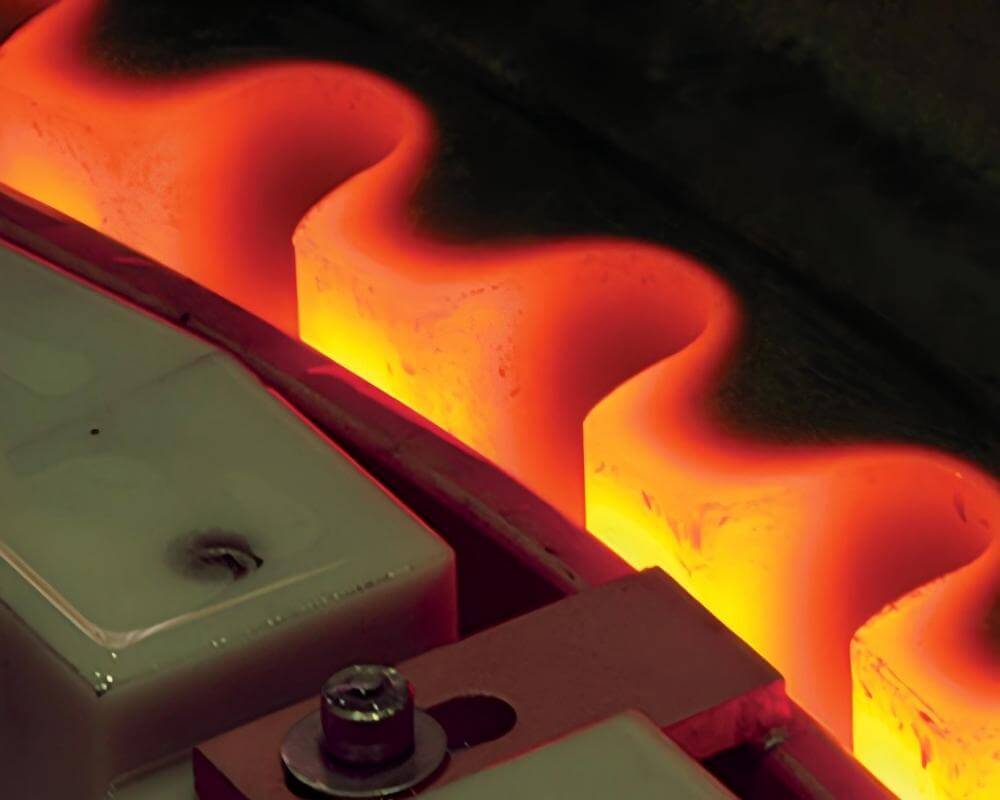
Induction heating is currently the cleanest, most efficient, most economical, most precise, and most repeatable method for heating materials in industry.
The applications of induction heating are extensive. It can be used to harden parts to prevent wear; to make metals ductile for forging or hot-forming into desired shapes; to braze or weld two parts together; and to melt and mix high-temperature alloy raw materials to manufacture jet engines, among other applications.
Induction heating technology is transforming industries by providing fast, efficient, and precise heating solutions. Whether you’re asking “How does induction heating work?” or “What is induction heating?”, our guide will answer your questions in an easy-to-understand way.
What is Induction Heating?
Induction heating is the process of heating electrically conductive materials, namely metals or semi-conductors, by electromagnetic induction, through heat transfer passing through an inductor that creates an electromagnetic field within the coil to heat up and possibly melt steel, copper, brass, graphite, gold, silver, aluminum, or carbide.
Key characteristics:
- Generates heat using electromagnetic induction
- Requires conductive materials, such as iron, steel, or copper
- Provides precise, localized heating
- Requires no fuel heat source
What is The Working Principle of Induction Heating?
A key characteristic of induction heating is that heat is generated within the object itself, rather than through conduction from an external heat source.
This allows for rapid heating. Furthermore, no external contact is required, which is especially important when contamination is a concern.
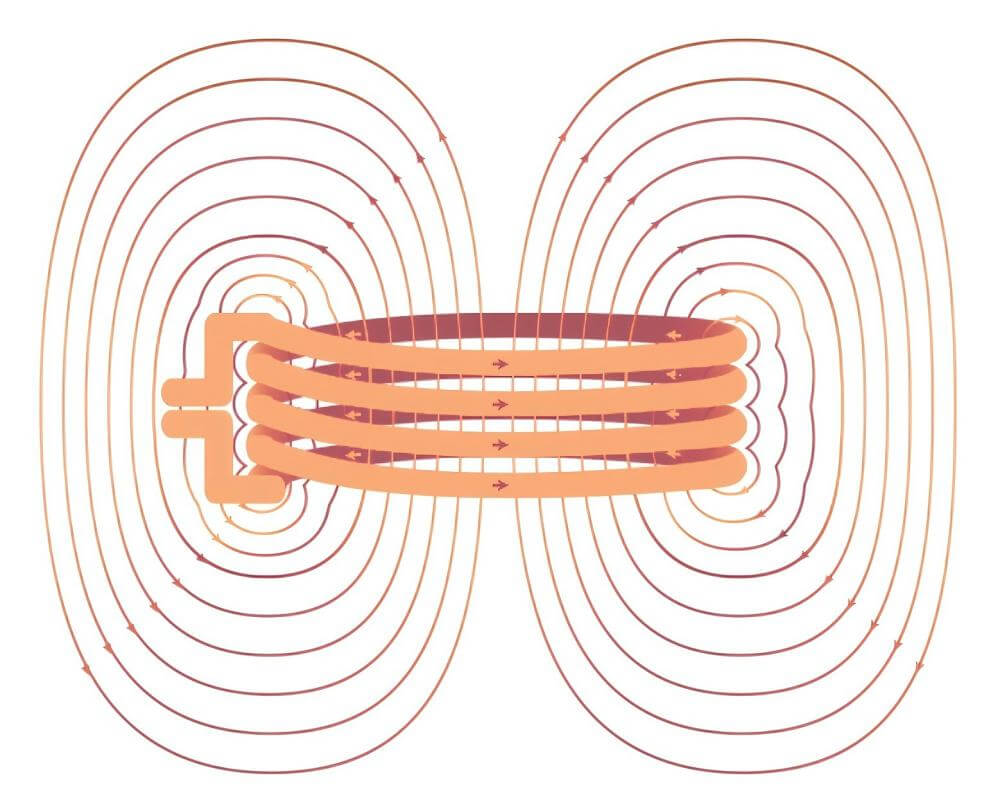
An induction heater consists of an electromagnet and an electronic oscillator. The oscillator transmits high-frequency alternating current (AC) through the electromagnet.
The rapidly alternating magnetic field penetrates the object, generating currents called eddy currents within the conductor.
These eddy currents flow through the material’s resistance and heat it via the Joule heating effect. In ferromagnetic and ferrimagnetic materials, hysteresis losses also generate heat.
The frequency of the current used in induction heating depends on the object size, material type, coupling, and penetration depth.
The Advantages of Induction Heating
Compared to traditional heating methods, induction heating offers several advantages:
High precision: Precise temperature control can be achieved through localized heating. Induction heating only heats a small portion of the workpiece, which is particularly advantageous when heating the entire part is unnecessary.
This advantage is crucial for parts that experience significant wear during normal operation. Previously, higher quality and more expensive materials were required to withstand operational wear. With induction heating, the required durability can be achieved by locally processing lower-cost materials.
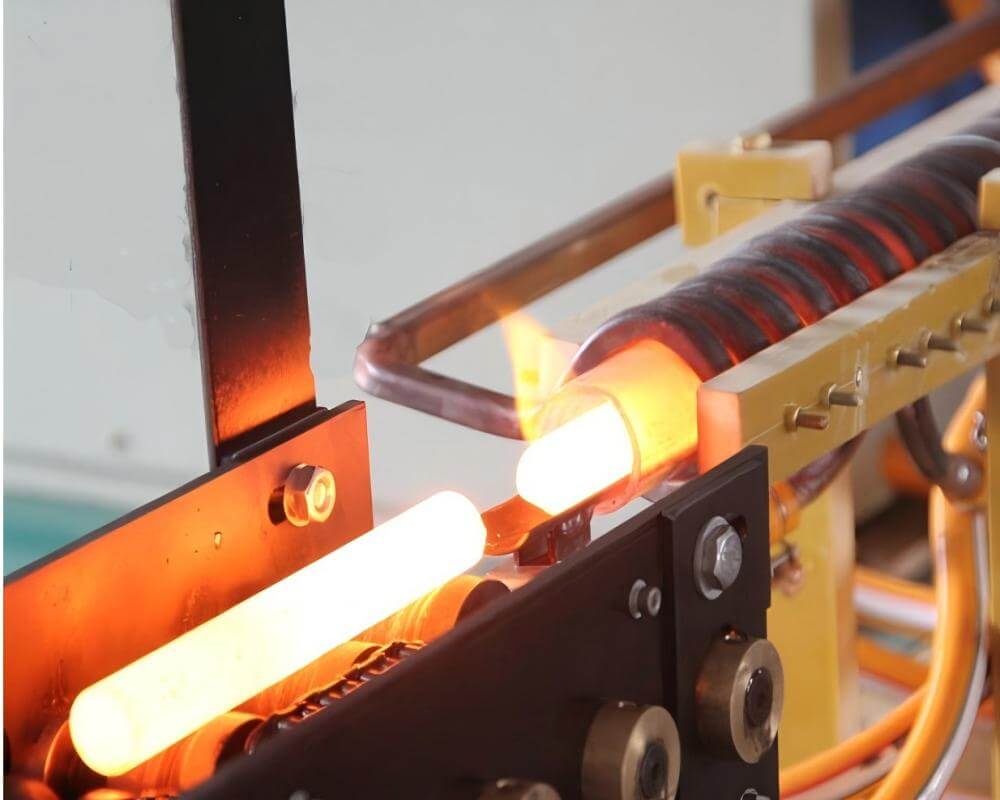
High speed: Properly tuned induction heating equipment, through efficient coil design and part handling, can process a large number of parts per minute. Because induction heating equipment is well-suited for automation, it can be easily integrated into existing parts production lines.
Unlike radiant heating, induction heating only heats the parts within the coil, avoiding unnecessary energy waste.
Especially suitable for highly repetitive operations: With proper tuning, induction heating equipment can continuously heat the same parts, achieving consistent heating results.
The ability to provide identical heating to consecutive parts means the process can be fully automated, enabling mechanical loading and unloading of workpieces.
Seamless Integration into Production Lines
Induction heating allows processes such as quenching to be fully integrated into automated production lines alongside other machine tools. This eliminates the need to separate heating operations across different departments, reducing part handling and saving valuable production time.
Reduced Material Handling and Improved Efficiency: By removing the need to transport parts between different areas of the factory, induction heating streamlines workflow, minimizes downtime, and increases overall manufacturing efficiency.
Clean and Environmentally Friendly Heating: Induction heating is a clean and environmentally friendly process. It generates heat only in the workpiece, producing no uncomfortable ambient heat, fumes, or grime commonly associated with traditional heat treatment or forging workshops.
Improved Working Environment and Operator Safety: Because induction heating does not rely on open flames or combustion, the surrounding work environment remains clean and comfortable. Operators benefit from improved safety, better air quality, and a more pleasant workspace.
Ideal for Clean and Controlled Heating Applications: Flame-free heating means no soot or contamination, making induction heating ideal for clean processes such as brazing. Additionally, because magnetic fields can penetrate materials like glass, induction heating supports controlled-atmosphere and enclosed heating applications.
Applications of Induction Heating
Induction heating is used across multiple industries for various applications:
Metallurgical Treatments
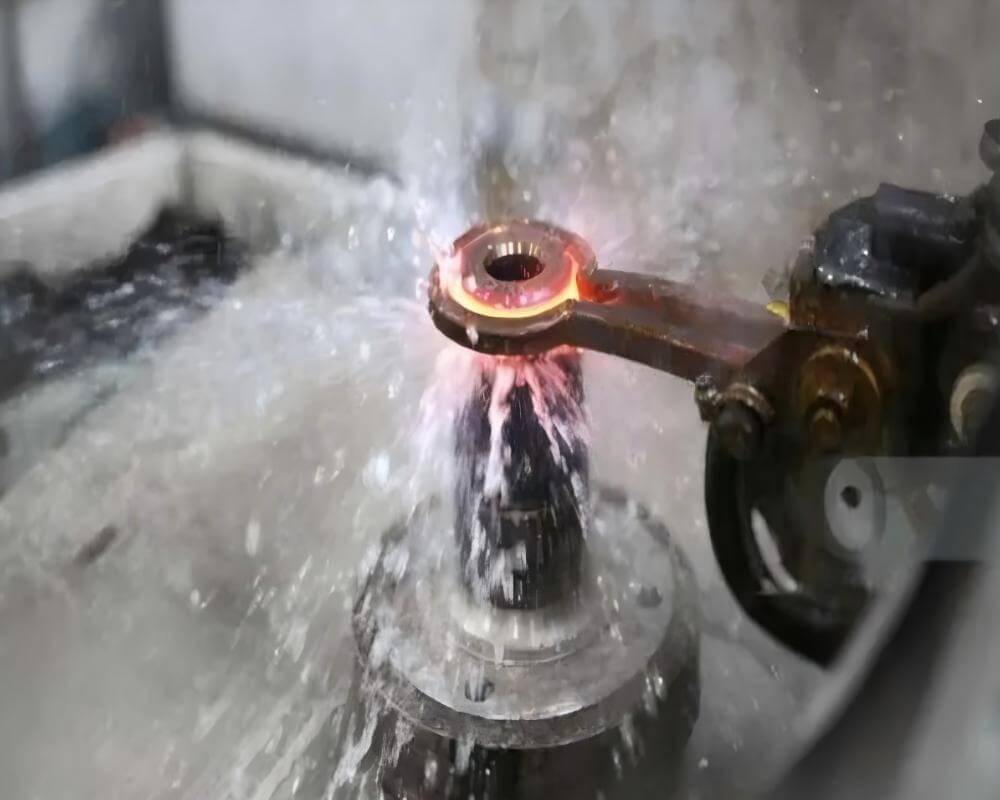
Induction is used for surface hardening gears and shafts, where only the outer layer is hardened for wear resistance while the core remains tough. It is also used for brazing and bonding metal components, as well as melting even high-temperature refractory metals with incredible speed.
Automotive
Automotive applications remove rusted bolts, heat bearings, and treat metal with induction heating, ideal for field repairs on combines and farm equipment, as well as collision shop work where precision and safety matter.
Medical and Scientific Fields
The ability to provide sterile, highly controlled, and localized heating makes induction a valuable tool in medical and scientific applications. It is used in processes where precise thermal management without contamination is essential.
Manufacturing & Agriculture
The applications of induction heater also include hardening, brazing, and soldering metal components. And agriculture applications involve removing rusted bolts, bearings, and seized parts from combines and other heavy-duty farming equipment with precision. Even in the field, using induction heating for safe, controlled results without the risks of an open flame.
Marine & Boat Repair uses incorporate freeing corroded components or applying heat without open flame in environments where safety and precision are critical.
Induction Heating vs. Traditional Heating Methods
| Feature | Induction Heating | Traditional Heating Methods |
| Energy Efficiency | Over 95% efficiency, with heat generated directly inside the workpiece | Up to 60% energy loss due to heat dissipation (e.g., gas or resistance heating) |
| Precision & Consistency | Advanced temperature control using infrared pyrometers and AI-driven algorithms ensures accuracy within ±1°C, preventing overheating | Limited temperature control, higher risk of overheating and material waste |
| Safety & Sustainability | No open flames or harmful emissions; can reduce carbon footprint by up to 50% | Open flames and exhaust gases pose safety risks and increase environmental impact |
| Speed & Productivity | Heats materials up to 50% faster; real-world use shows up to 900% increase in brazing throughput | Slower heating cycles limit production efficiency |
| Maintenance Requirements | No moving parts or combustion byproducts, resulting in low maintenance and reduced long-term costs | Higher maintenance due to mechanical wear, burners, and residue buildup |
The Future of Induction Heating
In today’s era of advanced engineering materials, induction heating stands out for its high efficiency and precision. Renowned for its speed, cleanliness, repeatability, accuracy, and energy efficiency, induction heating has become the preferred solution for modern manufacturing and a key driver of future industry development.
Since its inception, induction heating technology has developed rapidly. What began as a specialized process has evolved into a cutting-edge manufacturing technology, enabling faster production speeds, stricter process control, and more sustainable operations. Its localized, repeatable heating capabilities pave the way for more efficient new manufacturing methods.
Today, induction heating is widely recognized as a breakthrough solution in heat treatment, brazing, forging, and metalworking. It replaces traditional flame heating methods, redefining manufacturers’ considerations regarding productivity, quality, and environmental responsibility.
FAQs for Induction Heating
1. Can any type of metal be heated by induction?
Yes. Most metals can be heated by induction, whether magnetic or non-magnetic. Magnetic metals heat more easily, but non-magnetic metals can also be heated. Above the Curie point, magnetic metals may lose magnetism and become harder to heat.
2. Does a metal need to be magnetic for induction heating?
No. Both magnetic and non-magnetic metals can be induction heated. Magnetic materials are generally easier to heat, but magnetism is not required.
3. Why is induction heating so popular?
Because it is fast, precise, energy-efficient, and safe. Heating occurs only where needed, reduces energy consumption, and eliminates open flames and combustion gases.
4. Can induction heating heat only part of a metal?
Yes. Induction heating allows precise, localized heating of specific areas without heating the entire part.
5. Is induction heating a non-contact process?
Yes. The induction coil never touches the workpiece. Heat is generated through electromagnetic fields, ensuring clean and consistent heating.
6. Why is induction heating important in metallurgy?
It enables efficient hardening, annealing, tempering, brazing, soldering, and metal melting with precise temperature control and minimal contamination.
7. What is induction heat treatment?
Induction heat treatment is a metal processing method used for hardening, softening, brazing, and soldering. It delivers high power density and short heating times for controlled material properties.
8. What applications use induction heating?
Induction heating is used for metal melting, brazing, soldering, surface hardening, forging, and heat treatment across industrial and manufacturing sectors.
9. How has induction heating changed the heating industry?
It made heating portable, safer, and more accessible by eliminating open flames and enabling efficient, mobile heating with compact equipment.
KEXIN’s induction melting furnace has higher thermal efficiency and lower energy consumption. They can produce a mild metal bath mixture, mixing a uniform alloy at a constant and uniform temperature. For these reasons, this type of furnace is the first choice for induction melting. Kexin products can flexibly meet all customer requirements.
Can we help you?