
 Whatsapp
Induction Coil Design & Frequency Selection for Heating Applications
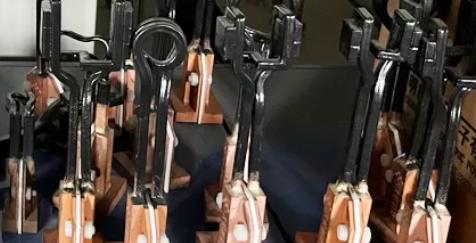
Induction heating is increasingly replacing traditional heating methods across various industries due to its numerous advantages, such as being pollution-free, providing uniform localized heating, and offering high precision.
However, many people overlook the crucial role of induction coil design in heating efficiency. The coil design directly impacts process efficiency and the quality of the final product. The ideal coil design depends on the specific application.
Some designs excel in particular applications, while mismatched coil designs can lead to uneven heating, longer processing times, higher defect rates, and decreased product quality.
In addition to understanding the working principles of induction heating coils, this article will explore the key principles of induction heating coil design and discuss the various available coil types.
How does an Induction Heating Coil Work?
Induction coils play a crucial role in determining the heating efficiency of a workpiece. They consist of a water-cooled copper conductor, typically a copper tube wound into a coil, used for induction heating.
The coil itself does not generate heat, but the water flowing through it helps maintain its temperature.
Induction coils vary in complexity, from simple helical or solenoid coils (copper tubing wound around a mandrel) to precision-machined coils made of solid copper and brazed together.
When alternating current passes through the coil, it generates an alternating electromagnetic field that transfers energy from the induction heater to the workpiece. This field induces eddy currents in the workpiece, which generate heat due to I²R losses (core losses).
The intensity of the induced current in the workpiece is proportional to the intensity of the electromagnetic field in the coil. This energy transfer process is known as the transformer effect or eddy current effect.

Induction Coil Design Considerations
Induction heating coil design plays a role in the effectiveness of the induction heating process. As a result, it is crucial to make the best selection when choosing its components.
Tubing Selection
The coil tubing must be made of high-conductivity copper, with an outer diameter of at least 0.32 cm to facilitate efficient water cooling. For high-power applications, the diameter may increase up to 5.1 cm to accommodate the greater energy requirements.
Coil Turn Numbers
Multi-Turn coils are ideal for single-shot, large-diameter heating. These coils have multiple turns that increase the overall proportion of the coil. However, when the diameter of the coil exceeds 4x–8x, it becomes difficult to produce uniform heating.
Single-Turn Coils
Single-turn coils are suitable for heating bands with narrow diameters. The height and diameter of single-turn coils vary slightly with size.
Design of Coil Leads
The design and structure of the working coil leads have a significant impact on the coil’s performance.
The coil is part of a resonant circuit, and all leads connecting the resonant capacitor and the coil introduce inductance. Higher inductance in the coil’s heating region helps to offset the inductive effect of the leads.
Coil Bracing
Proper coil bracing is crucial in induction coil design to prevent unwanted movement caused by magnetomotive forces. During induction heating, electric current flow in the coil and workpiece generates these forces, which can become uncontrollable without adequate bracing.
Distance of Coupling
Coupling refers to the gap between the induction coil and the workpiece. For progressive heating, the optimal coupling distance is 0.19 cm. However, for magnetic materials, the coupling distance should range from 0.25 to 0.38 inches.
A small gap between the coil and the workpiece is called tight coupling, while a larger gap is referred to as loose coupling.
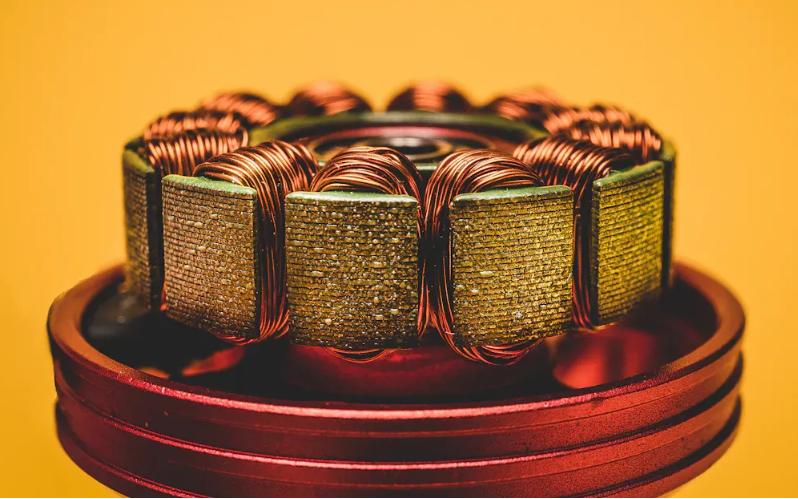
Practical Tips for Coil Design and Frequency Selection
Induction heating coil design is an important aspect of induction heating, as it determines how effectively and efficiently a workpiece is heated by the electromagnetic field generated by the coil.
The induction coil should be designed to match the shape, size, and material of the workpiece, as well as the desired heating pattern, frequency, and power. Some factors to consider when selecting an induction heating coil are:
Part motion relative to the coil: The coil should accommodate the movement of the part, whether it is stationary, rotating, or moving along a conveyor. The coil should also avoid contact with the part or any other metal objects that could cause arcing or short circuits.
Frequency: The frequency of the alternating current in the coil affects the depth and uniformity of heating in the workpiece. Higher frequencies produce more surface heating, while lower frequencies produce deeper heating. The frequency also depends on the electrical conductivity and magnetic permeability of the workpiece material.
Coupling distance: The coupling distance is the gap between the coil and the workpiece. A smaller gap produces a stronger magnetic field and faster heating but also increases the risk of arcing or overheating. A larger gap reduces the heating efficiency and requires more power, but also provides more clearance for part movement and cooling.
Uniformity: The coil should be designed to produce a uniform heating pattern across the workpiece, avoiding hotspots or cold areas that could affect the quality or performance of the part. The coil shape, size, number of turns, and position relative to the workpiece all influence the heating uniformity.
Solenoids: A solenoid is a simple coil shape that consists of some turns of copper tubing wound around a mandrel. Solenoids are commonly used for induction heating applications that require heating along a cylindrical or tubular part, such as brazing, annealing, or hardening.
Conclusion
Choosing the right induction heating coil is crucial for achieving optimal system performance. Factors such as coil size, shape, material, and intended use all affect its efficiency and durability. If you are unsure, our engineering team is ready to assist you.
Contact us to discuss your specific induction heating needs, and we will leverage our expertise to guide you in optimizing your heat treatment process. We can recommend the latest technologies tailored to your specific requirements.
KEXIN’s induction melting furnace has higher thermal efficiency and lower energy consumption. They can produce a mild metal bath mixture, mixing a uniform alloy at a constant and uniform temperature. For these reasons, this type of furnace is the first choice for induction melting. Kexin products can flexibly meet all customer requirements.
Can we help you?