
 Whatsapp
Advantages and Disadvantages of Induction Heating Technology
Induction heating is revolutionizing industrial heating, offering unparalleled speed, energy efficiency, and precision.
Many are curious about the advantages and disadvantages of various induction heating applications, including induction hardening, induction brazing, induction forging, induction melting, and induction quenching.
This article will delve into the core principles of induction heating, the reasons for its increasing popularity, and the key factors to consider when selecting an induction heating system.
High-frequency induction motors and induction heating technology have been widely applied in various industries for heat treatment, hot working, hot assembly, welding, and smelting of metallic materials.
It can heat workpieces both as a whole and locally; it can achieve deep heating of the workpiece’s interior or surface heating only; it can directly heat metallic materials and indirectly heat non-metallic materials, among other applications.
Induction heating is a heat treatment process that uses induced current to locally heat the surface of a workpiece. This process is typically used for surface hardening, but can also be used for local annealing or tempering, and sometimes for overall quenching and tempering.
As early as the early 1930s, the United States and the Soviet Union applied induction heating methods to the surface hardening of parts. With industrial development, induction heating and heat treatment technologies have continuously improved, and their application scope has expanded.
Basic Principles of Induction Heating
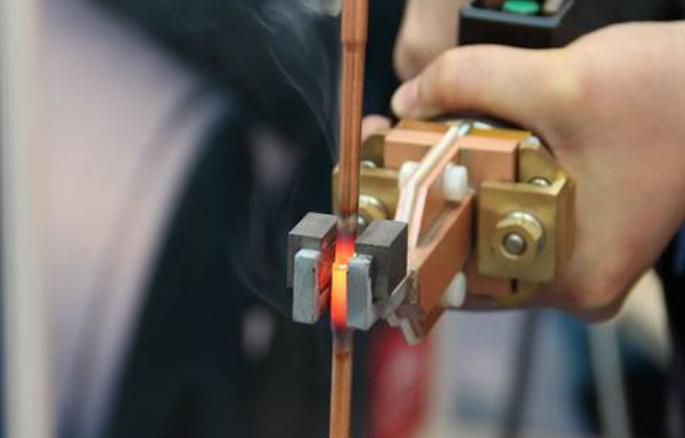
Induction heating is a process that uses electromagnetic fields to heat materials, typically metals, by inducing electric currents (called eddy currents) inside the material. These currents generate heat due to the material’s resistance.
What makes induction heating unique is that the heat is generated directly inside the material, without the need for external flame or heated elements.
The coil carrying alternating current generates a magnetic field, which induces these currents in the workpiece, efficiently converting electrical energy into heat.
One of the key factors that influence induction heating is the skin effect: higher-frequency currents concentrate the heat at the surface of the material, while lower frequencies can heat deeper sections. The depth of heating can be fine-tuned based on the material and the specific needs of the process.
Categories of Induction Heating Systems
Induction heating systems come in various frequency bands, each designed for different applications:
High Frequency (HF): This range is typically used for surface hardening and shallow heating. It offers rapid heating times and is ideal for smaller parts.
Medium Frequency (MF): Used for deeper heating, such as for metal melting and large-scale forging, where the depth of heating is critical.
Low Frequency (LF): This frequency is used for applications that require deep heating, such as shrink fitting or certain types of annealing.
Power Frequency (PF): This system works at the standard power supply frequency and is often used for very large workpieces or applications that don’t require fast heating.
Each category offers specific advantages, depending on the type of material being heated and the depth of heating required.
https://www.hfinductionheater.com/category/induction-heating-machine/
Features and Applications of Induction Heating
The advantages of induction heating go far beyond speed and energy efficiency. Here are its key features and the reasons for its rapid adoption across various industries:
Energy Efficiency: Induction heating is extremely efficient because it generates heat directly within the material, significantly reducing energy loss. Some systems achieve energy conversion efficiencies of up to 95%, making induction heating a highly cost-effective solution for numerous industrial applications. This energy efficiency helps companies reduce operating costs and their environmental footprint.
Speed and Precision: Induction heating can heat materials rapidly, reaching the desired temperature in just seconds. This allows for precise control of the heating process, which is particularly important in processes such as quenching, brazing, and melting, where precise temperature and minimal heating time are crucial for achieving high-quality processing results.
Clean and Safe: Unlike traditional heating methods that use open flames or combustible gases, induction heating is a clean and safe process. It avoids the generation of contaminants and reduces the risk of oxidation and thermal deformation. Materials can be heated quickly and uniformly, minimizing the need for subsequent cooling processes, further reducing energy consumption and increasing production efficiency.
Flexibility: A major highlight of induction heating is its versatility. It can be applied to numerous industries and fields, including quenching, heat shrink assembly, brazing, and forging. This technology can adapt to various workpiece geometries, making it suitable for both small parts machining and large industrial applications.
Characteristics and Applications of Induction Heating
The main advantages of induction heating are obvious:
- Minor Deformation and Low Energy Consumption: Induction heating causes minimal deformation to the workpiece, making it ideal for precision machining. It also saves energy and reduces overall energy consumption.
- Fast Heating Rate and Less Oxidation: The rapid heating rate minimizes surface oxidation and decarburization, thereby improving material properties.
- Precise Surface Hardening: Induction heating allows for precise control of the hardened layer depth, easily achieving the desired hardness.
- Automation Compatibility: Induction heating equipment can be integrated into machining production lines, promoting mechanization and automation. This integration reduces manual labor, increases production efficiency, and lowers transportation costs.
- Enhanced Material Properties: The surface hardening produced by induction heating generates greater internal compressive stress, thereby improving the fatigue resistance and crack resistance of the workpiece.
- Improved Strength and Toughness: This process improves the hardness, strength, and toughness of materials, making it ideal for high-performance applications. Disadvantages of Induction Heating
While induction heating offers numerous advantages, it also presents several disadvantages:
Complexity and Higher Initial Cost: Compared to flame hardening or other traditional methods, induction heating systems are more complex and require higher upfront investment. Equipment costs (including power supplies and induction coils) can be quite high, especially in the case of custom designs.
Limited Adaptability: Induction heating is not always suitable for workpieces with complex shapes. The adaptability of induction coils (inductors) may be limited, making it difficult to guarantee consistent machining quality for irregularly shaped or difficult-to-machine parts.
Interchangeability Issues: Induction coils may have poor interchangeability, and their design must be customized for each application, increasing the overall cost and complexity of the system.
Applications of Induction Heating
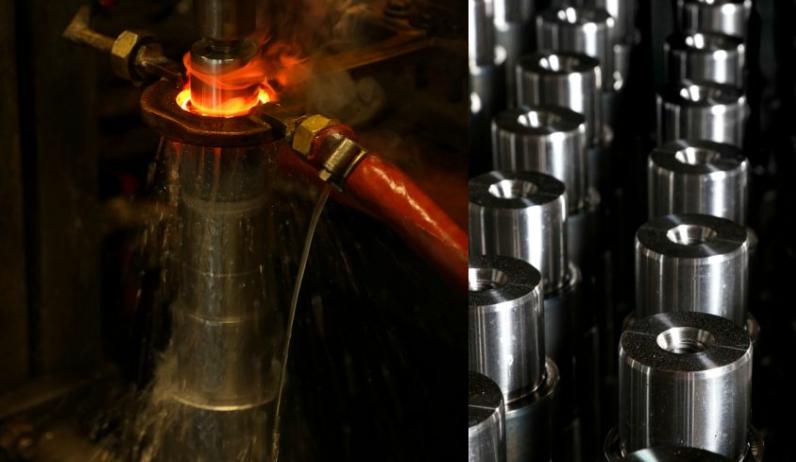
Induction heating is used in a variety of industries, from automotive manufacturing to metalworking, due to its speed, precision, and energy efficiency. Some of the most common applications include:
Surface Hardening
Induction heating is widely used for surface hardening of gears, shafts, and other high-wear components. It enables precise control over the depth and hardness of the surface layer, improving the durability of critical parts.
Brazing and Welding
For joining metals, induction heating is ideal as it precisely targets the heating area, minimizing the impact on surrounding materials and ensuring strong, clean joints.
Melting and Forging
Induction is often used for melting metals or shaping parts in forging applications. Its ability to deliver rapid, uniform heating makes it perfect for these high-temperature processes.
Shrink Fitting
Induction heating can expand metal parts, allowing them to be easily fitted together. When the part cools, it contracts tightly around the other component, providing a secure fit.
Equipment for Induction Heating
Induction heating systems consist of several components that work together to achieve the desired heating effects.
Key pieces of equipment include:
Induction Coil: The coil is the most important component in the system. It generates the magnetic field that induces eddy currents in the workpiece. The coil’s design is customized based on the size and shape of the workpiece, as well as the application’s specific requirements.
Power Supply/Inverter: The power supply or inverter converts electrical energy into the appropriate frequency and power level for the induction coil. It plays a crucial role in controlling the heating process, ensuring that the material is heated quickly and uniformly.
Cooling System: To prevent overheating of the system, especially the coil and power supply, cooling systems are used. Water or air cooling is commonly employed to maintain optimal operating temperatures.
Control System: Modern induction heating systems are equipped with advanced control systems that allow for precise regulation of temperature, power, and heating time. These systems ensure repeatability and consistency in the heating process.
Selection and Considerations
Despite its many advantages, there are some limitations to induction heating that need to be considered when selecting the right system for your process.
While induction systems provide rapid and localized heating, they tend to require a higher initial investment compared to traditional methods like flame or resistance heating. The systems are more complex, involving high-frequency inverters, custom coils, and specialized controls, which can add to the cost.
Additionally, induction heating is most effective for conductive materials like metals. It may not be the best choice for non-metallic materials unless modifications or specialized systems are used.
Furthermore, the design of the induction coil must be carefully matched to the workpiece’s geometry, which can sometimes require additional customization, especially for parts with irregular shapes.
How Kexin’s Induction Heating Systems Stand Out?
At Kexin, we are committed to optimising the benefits of induction heating while minimizing its challenges. Our systems are designed with scalability in mind, offering a range of power outputs and frequencies to suit various applications, from surface hardening to deep heating. We focus on:
Custom Coil Design
To ensure optimal heat distribution, we design coils that fit the specific geometry and needs of each application. This helps maximise heating efficiency and minimises downtime caused by coil wear and tear.
Advanced Control Systems
Our systems use digital PID controllers and intelligent inverter technology to maintain tight temperature tolerances, ensuring consistent results across each heating cycle.
Energy Efficiency
By reducing energy waste and minimizing cooling needs, Kexin’s induction systems help businesses lower operational costs and reduce their environmental footprint.
Integration and Automation
Our systems are designed to integrate seamlessly into automated production lines, increasing throughput and reducing labor costs. They are also equipped with safety features like over-temperature protection and fault detection, ensuring safe and reliable operation.
Conclusion
The primary function of an induction heating machine is workpiece positioning and necessary movement; it should also be equipped with a quenching medium device.
Quenching machines can be divided into standard quenching machines and special-purpose quenching machines. The former is suitable for general workpieces and is ideal for mass production of complex workpieces.
To ensure heat treatment quality and improve thermal efficiency, induction heating heat treatment requires the design and manufacture of suitable sensor structures based on the workpiece shape and requirements.
Common sensor types include: external surface heating type, internal hole heating type, planar heating type, general heating type, special type heating type, single type heating type, composite heating type, and furnace heating type.
By selecting a suitable induction heating system, enterprises can improve production efficiency, enhance product quality, and reduce costs; therefore, induction heating is a wise investment for the future.
KEXIN’s induction melting furnace has higher thermal efficiency and lower energy consumption. They can produce a mild metal bath mixture, mixing a uniform alloy at a constant and uniform temperature. For these reasons, this type of furnace is the first choice for induction melting. Kexin products can flexibly meet all customer requirements.
Can we help you?