
 Whatsapp
Why Use Induction Furnace for Copper Melting?
Induction furnaces are becoming increasingly popular in the manufacturing industry, especially for melting copper.
This technology offers many advantages over traditional melting methods, such as increased energy efficiency, precise temperature control, and reduced environmental impact.
In this blog, we will take an in-depth look at why induction furnaces are the preferred choice for melting copper in industrial settings. Understanding the advantages of induction furnaces for melting copper is essential to staying ahead in a competitive market.
Current Global Market Status of Induction Furnace for Melting Copper
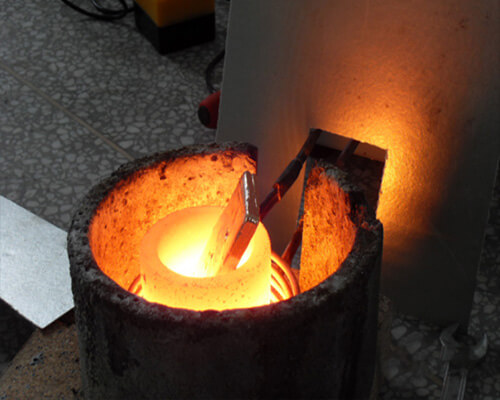
The global market for induction furnaces specifically designed for melting copper has been growing significantly. As demand for copper continues to grow across industries such as electronics, automotive and construction, the need for an efficient and environmentally friendly melting process has become increasingly apparent. Induction furnaces, known for their precision and energy efficiency, are at the forefront of this technological development.
What is an Induction Furnace for Melting Copper?
An induction furnace for melting copper is a furnace that uses electromagnetic induction to heat and melt copper. It is commonly used in foundries and metal processing plants to melt scrap copper, copper ingots, or other forms of copper to cast or make various products.
The working principle of an induction melting furnace is to use an induction coil to generate high-frequency alternating current, which creates a magnetic field and induces eddy currents in the copper, rapidly heating and melting the copper. This method is efficient, fast, and precise, making it a popular choice for melting copper in industrial applications.

Working Principle of Induction Furnace
Induction furnaces operate on the principle of electromagnetic induction. Inside the furnace is a coil of copper wire wrapped around a crucible that contains the material to be melted. When alternating current (AC) is passed through the coil, a magnetic field is created.
This magnetic field induces eddy currents in the material inside the crucible, causing it to heat up rapidly. The material’s resistance to the flow of these eddy currents creates frictional heat, which melts the material.
The temperature of the material can be controlled by adjusting the frequency and power of the AC current flowing through the coil. Once the material is melted, it can be poured or cast into the desired shape.
Components of an Induction Furnace for Copper Melting
An induction furnace is a furnace that uses electromagnetic induction to heat and melt metals. It is often used to melt and refine metals, such as copper, in industrial settings. The operation of an induction furnace involves several components working together:
Crucible
The crucible is the container that holds the metal to be melted. It is usually made of a refractory material such as graphite and is placed inside an induction coil.
Induction Coil
The induction coil is a loop of copper tubing that creates an electromagnetic field when an alternating current is passed through it. This field induces an electric current in the metal inside the crucible, causing it to heat up and melt.
Power Supply
The power supply provides the alternating current needed to create the electromagnetic field in the coil. The frequency and power of the current can be adjusted to control the temperature of the metal.
Cooling System
Induction furnaces generate a lot of heat, so a cooling system is required to prevent overheating. This may involve circulating water or other coolant through the coil and crucible.
Induction furnaces are a versatile and effective method that can quickly and accurately control temperature, making them ideal for a variety of melting and refining processes.
Why Induction Furnace is Perfect for Melting Copper?
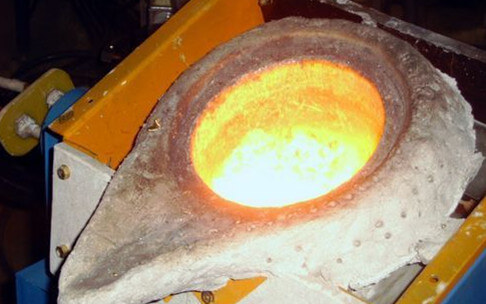
There are many ways to melt copper, such as melting it in a furnace, melting it with a blowtorch, or using an induction furnace. Melting copper using an induction furnace is a more efficient method than any other method and is favoured by the industry.
There are several reasons for this:
Efficiency: Induction furnaces are highly efficient at melting copper because they use electromagnetic induction to generate heat directly in the metal. This minimizes heat loss and speeds up the melting process compared to traditional methods.
Precise temperature control: Induction furnaces offer precise temperature control, which can precisely melt copper to the desired consistency and properties.
Clean and environmentally friendly: Induction furnaces do not produce harmful emissions or pollutants during the melting process, making them an environmentally friendly method of melting copper.
Versatility: Induction furnaces are versatile and can handle a wide range of copper alloys and compositions, making them ideal for melting different types of copper materials.
Low maintenance costs: Induction furnaces require very low maintenance costs and have a longer service life compared to other melting methods, making them a cost-effective method of melting copper.
Benefits of Using Induction Furnaces for Melting Copper
PPower Regime: Flexibility and Energy Efficiency
Induction melting furnaces, such as those used to melt copper, offer extraordinary flexibility, especially when it comes to alloying. These furnaces can be easily shut down during downtime, and relining is a quick process.
Additionally, induction furnaces, including induction copper melting furnaces, are energy efficient, consume less electricity, and have longer refractory life. Their high melting rates allow large quantities of copper to be melted quickly, optimizing production.
Reliability: A Sound Investment
When it comes to melting copper, induction furnaces, such as those used to melt copper, outperform other alternatives in terms of reliability.
Unlike conventional furnaces, induction furnaces, such as copper induction furnaces, do not require frequent replacement or repair of parts.
This inherent durability ensures uninterrupted operation, allowing manufacturers to maximize the performance of the furnace without unnecessary downtime.
Cleanliness: Promotes a Healthy Environment
Induction copper melting furnaces are known for their cleanliness, emitting significantly fewer pollutants than other types of furnaces.
By utilizing induction technology, foundries can protect employees from hazardous materials and maintain a clean air environment, which helps prevent further oxidation of the copper. The result is not only a safer working environment but also improved product quality.
Energy efficiency: a sustainable solution
Modern induction furnaces, such as those used to melt copper, offer superior electrical efficiency, reducing environmental impact and saving costs.
By choosing an induction furnace, such as those used to melt copper, foundries ensure optimal productivity while also contributing to sustainable practices.

Key Considerations for Choosing an Induction Furnace for Copper Melting
When selecting an induction furnace for copper melting, several factors should be considered:
Furnace capacity and power requirements: Choose a furnace size and power capacity that aligns with the desired production volume, ensuring efficient copper melting.
Copper melting rate and efficiency: Evaluate the furnace’s melting speed and efficiency to optimize production processes and enhance overall productivity.
Crucible material selection: Select a crucible material that can withstand high temperatures and resist chemical reactions with molten copper, ensuring durability and compatibility.
Safety features and controls: Prioritize safety by considering features such as temperature monitoring, emergency shut-offs, and fume extraction systems to maintain a secure working environment.
Maintenance and serviceability: Ensure easy access to components and prioritize regular maintenance to maximize furnace performance and minimize downtime.
Installing an Induction Furnace for Melting Copper
When installing an induction furnace for melting copper, it is important to follow these steps to ensure proper installation and operation:
Prepare the site: Choose a location for the induction furnace that is well-ventilated and has adequate space for operation and maintenance. Make sure the floor is level and can support the weight of the furnace and the copper material to be melted.
Assemble the furnace components: Follow the manufacturer’s instructions to assemble the induction furnace, including connecting power cables, water cooling systems, and other necessary components.
Install the crucible: Place the crucible inside the furnace and make sure it is securely in place. The crucible will hold the copper material to be melted and should be properly sized for the furnace.
Connect power supply: Connect the induction furnace to a reliable power supply that meets the voltage and current requirements of the furnace. Make sure all electrical connections are secure and follow proper safety procedures when working with electricity.
Test the furnace: Before melting any copper material, run a test cycle to ensure the furnace is operating correctly. Monitor the temperature, power settings, and other parameters to make sure they are within the recommended range.
Melting copper: Once the furnace is properly installed and tested, you can begin melting copper material. Follow all safety guidelines for handling molten metal and wear appropriate protective gear.
By following these steps, you can safely and effectively install an induction furnace for melting copper. Proper installation and operation will help ensure consistent melting results and prolong the life of your furnace.
Applications of Induction Furnaces for Copper Melting
Induction furnaces have a wide range of applications across various industries.
Here are some of the key areas where induction furnaces are used to melt copper:
Copper Foundries and Metal Casting Industry: These facilities rely on induction furnaces for various copper-based applications. Foundries and metal casting operations use induction furnaces to produce copper pipes, wires, rods, and various copper alloy components.
Recycling and Scrap Metal Processing: Induction furnaces, such as induction copper melting furnaces, play a vital role in recycling practices and scrap metal processing. By efficiently melting scrap copper and other metallic materials, induction furnaces are able to extract valuable copper. This helps in reducing waste and conserving natural resources, thereby enabling sustainable practices.
Conclusion
Induction furnaces for copper smelting are revolutionizing the copper smelting industry with their efficiency, precision and environmental benefits. The global market is expanding, driven by the growing demand for copper and the need for more sustainable manufacturing processes.
Kexin Electronic Instrument plays a vital role in providing high-quality, reliable induction furnaces and comprehensive support services, making it an excellent choice for companies looking to enhance their copper smelting operations.
KEXIN’s induction melting furnace has higher thermal efficiency and lower energy consumption. They can produce a mild metal bath mixture, mixing a uniform alloy at a constant and uniform temperature. For these reasons, this type of furnace is the first choice for induction melting. Kexin products can flexibly meet all customer requirements.
Can we help you?