
 Whatsapp
Induction Forging Process, Benefits, and Industrial Applications
Induction forging has become an essential process in modern manufacturing, offering significant advantages over traditional heating methods. This advanced technique relies on the principles of electromagnetic induction to generate heat within a metal part, allowing for highly efficient, precise, and localized heating.
With the growing need for high-performance, complex parts across various industries, induction forging has proven itself to be one of the most efficient and reliable solutions in the field of metalworking.
In this article, we will explore the induction forging process in detail, its numerous benefits, and the various industrial applications where it plays a crucial role.
What is Induction Forging?
Induction forging is a heat treatment process used to heat metal workpieces to a forging temperature using electromagnetic induction. Unlike traditional heating methods, such as gas or furnace heating, induction forging uses an induction coil through which an alternating electric current is passed.
This generates a rapidly changing magnetic field, which induces an electric current in the metal. The resistance of the metal causes it to heat up, producing the localized heat needed for the forging process.
The most remarkable feature of induction heating is that it heats the metal directly without the need for any external flame or combustion.
The heat is generated inside the workpiece, minimizing energy loss and ensuring more precise control over the heating area. This process is especially useful when it comes to producing high-quality parts with excellent material properties.
Induction Forging Process: Key Steps
The induction forging process can be broken down into several key steps:
Preparation of the Metal Workpiece
The first step involves preparing the metal part. The material is cleaned to remove any impurities, such as oils, dirt, or rust, which can interfere with the efficient transfer of energy during the heating process.
Ensuring the workpiece is clean allows for better heat conductivity and more even heating, reducing the risk of defects in the final product.
Induction Heating
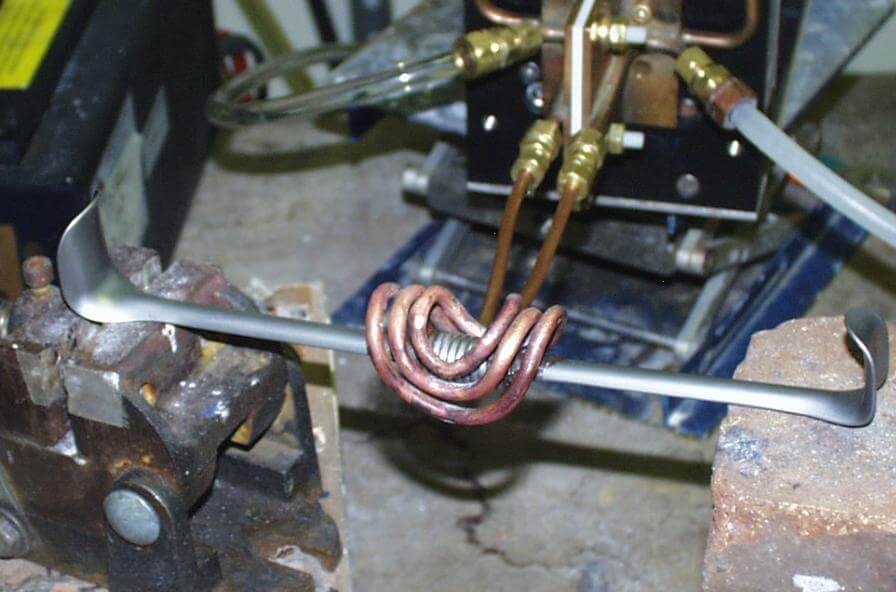
The workpiece is placed inside or near an induction coil. An alternating current is passed through the coil, which generates a magnetic field. This rapidly changing magnetic field induces currents within the metal (called eddy currents).
The resistance of the metal to these currents causes the material to heat up. The heating is localized to the area within the coil, allowing manufacturers to target specific regions of the workpiece for forging.
The heating time is very fast, typically just a few seconds, which contrasts sharply with traditional heating methods that take much longer to heat the entire workpiece.
Forging
Once the workpiece reaches the desired forging temperature, it is immediately moved to a press, hammer, or die. At this point, the heated metal is subjected to mechanical deformation, shaping it into the desired component or part. The metal can be shaped into a variety of forms, including complex geometric shapes, with high precision.
Cooling
After the forging process, the workpiece is allowed to cool down. Cooling can be done in air or through controlled quenching (using water or oil) to ensure that the desired material properties are achieved.
The cooling process may vary depending on the material and the intended application of the forged part.
Benefits of Induction Forging
Induction forging has gained popularity due to the many benefits it offers over traditional heating methods. Some of the most notable advantages include:
Energy Efficiency
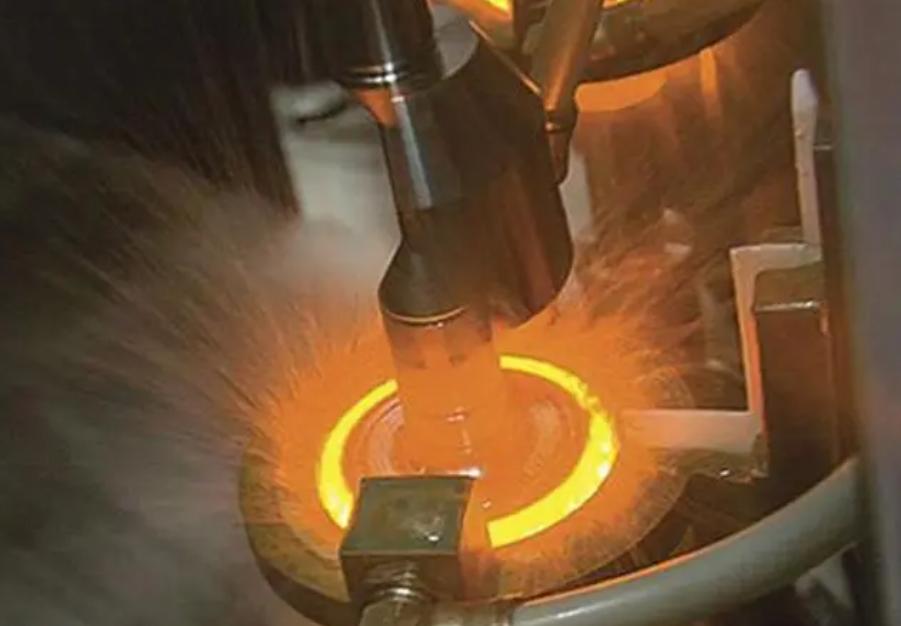
Induction forging is an energy-efficient method of heating. Unlike traditional furnace heating, which requires heating the entire furnace chamber and losing a significant amount of heat to the surroundings, induction heating generates heat directly in the workpiece itself. This eliminates energy loss, resulting in lower energy consumption. This efficiency leads to cost savings and a more environmentally friendly production process.
Faster Heating Times
One of the standout features of induction forging is the speed at which it heats the workpiece. The ability to heat the metal rapidly (in just a few seconds) allows manufacturers to increase production rates and improve overall throughput.
This rapid heating reduces downtime, making the process highly efficient and suitable for large-scale manufacturing.
Precision and Control
Induction heating offers unparalleled precision and control over the heating process. Manufacturers can control the temperature of the workpiece with great accuracy, which is critical in producing parts with specific material properties.
The heating is localised, which means the exact area that requires heat can be targeted without affecting other parts of the workpiece. This precise control reduces the risk of overheating or underheating, both of which can negatively impact the quality of the forged part.
Improved Material Properties
By precisely controlling the heating and cooling processes, manufacturers can improve the mechanical properties of the forged parts. Induction heating can help to achieve optimal material characteristics, such as strength, hardness, and durability, which are essential for components that will experience heavy use in demanding environments.
Flame-Free Operation
Traditional furnace heating involves combustion and open flames, which pose risks such as heat loss, inconsistent temperature distribution, and safety hazards. Induction forging is flame-free, providing a much safer environment.
The process is also cleaner, as there are no fumes or emissions generated during heating, contributing to a healthier and more sustainable workplace.
Reduced Scrap Rates
The high level of precision provided by induction heating results in fewer defective parts. Manufacturers can better control the heating of metal, which reduces the risk of defects such as cracks or uneven material properties.
As a result, there are fewer parts that need to be scrapped or reworked, leading to reduced material waste and lower production costs.
Industrial Applications of Induction Forging
Induction forging plays a significant role in various industries, offering solutions for the production of high-performance parts with superior material properties. Below are some of the primary industrial applications of induction forging:
Automotive Industry
The automotive industry is one of the largest beneficiaries of induction forging. It is used to manufacture critical components such as crankshafts, gears, pistons, and connecting rods.
These parts require high strength and precision to withstand the stresses and strains encountered in automotive engines. Induction forging ensures that these parts have the necessary material properties for maximum performance and durability.
Aerospace
In the aerospace sector, induction forging is used to produce components such as turbine blades, landing gear, and engine parts. These parts must meet stringent safety and performance standards, as they are exposed to extreme temperatures and mechanical stresses during operation.
Induction forging’s ability to precisely control the material properties of these components makes it an ideal solution for the aerospace industry.
Oil and Gas
The oil and gas industry also relies on induction forging for the production of high-strength parts that must withstand extreme conditions. Components like drill bits, valves, and flanges need to endure high pressures and temperatures, making induction forging the ideal method for producing parts that can handle these tough environments.
Tooling and Die Making
Induction forging is commonly used to create tooling and dies used in various manufacturing processes. These parts require uniform hardness and strength to perform effectively over long production runs. The ability to precisely control the temperature and material properties of the tooling ensures longer tool life and more reliable performance.
Industrial Machinery
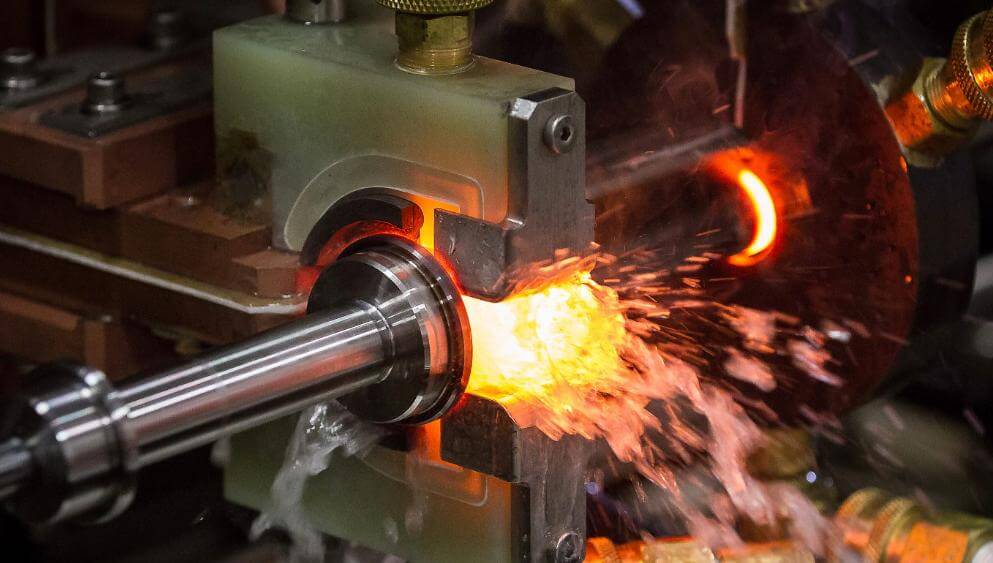
In the industrial machinery sector, components such as shafts, gears, and couplings are often produced through induction forging. These parts are critical for the proper functioning of machines and must have the strength to withstand continuous use under high mechanical loads.
Defense and Military
In defense and military applications, parts made through induction forging, such as armored vehicle components and weapon systems, need to be highly durable and reliable. The exacting control over the material properties provided by induction forging ensures that these critical components perform as needed in demanding environments.
Conclusion
Induction forging has emerged as a highly efficient, precise, and cost-effective solution for manufacturing high-performance parts across a range of industries. Its ability to heat metals rapidly, control temperature precisely, and improve material properties has made it a preferred method for producing critical components in industries such as automotive, aerospace, oil and gas, and more.
With its numerous advantages, including energy efficiency, speed, precision, and flame-free operation, induction forging continues to play a pivotal role in modern manufacturing.
As industries strive for greater efficiency, lower production costs, and higher-quality parts, the demand for induction forging is expected to grow, solidifying its place as one of the most important processes in metalworking.
KEXIN’s induction melting furnace has higher thermal efficiency and lower energy consumption. They can produce a mild metal bath mixture, mixing a uniform alloy at a constant and uniform temperature. For these reasons, this type of furnace is the first choice for induction melting. Kexin products can flexibly meet all customer requirements.
Can we help you?