
 Whatsapp
Exploring High Frequency and Medium Frequency Induction Heating Equipment
Induction heating is a widely utilized process across various industries, including brazing, welding, metal hardening, and surface hardening. The effectiveness of this process depends heavily on the frequency of the induction heating equipment used.
In this article, we will explore the distinctions between high frequency heating furnaces and medium frequency induction heating equipment, focusing on their operating principles, applications, advantages, and considerations.
Additionally, we will provide insights into induction heating frequency selection to help industries optimize their processes.
Operating Principles of Induction Heating
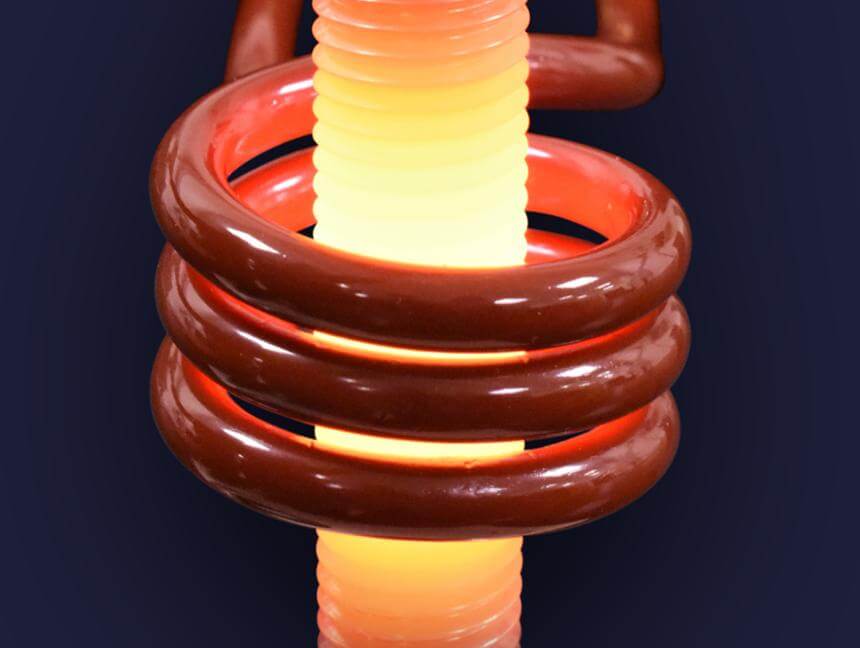
Induction heating is the process of heating electrically conductive materials, such as metals and semiconductors, through electromagnetic induction. This process involves the creation of an electromagnetic field within the coil, which transfers heat to the workpiece, causing it to heat up or even melt.
The efficiency of induction heating is influenced by the frequency of the electromagnetic field used. Higher frequencies lead to shallower heat penetration, making them suitable for surface treatments, while lower frequencies allow for deeper heat penetration, ideal for heating larger workpieces.
High Frequency Induction Heating
High-frequency induction heating equipment operates within the frequency range of 60 kHz to 200 kHz. This higher frequency results in shallow heat penetration, making it ideal for rapid heating of small components, particularly those requiring surface treatments.
Key Characteristics of High-Frequency Induction Heating:
- Shallow Heat Penetration: The heat generated by high-frequency induction is concentrated near the surface of the workpiece. This is advantageous for applications like surface hardening, brazing, and soldering, where only the outer layer of the material needs to be heated.
- Rapid Heating: High-frequency heating allows for quick heating cycles, significantly reducing processing times and boosting productivity.
- Ideal for Smaller Workpieces: This frequency range is particularly effective for small components, such as gears, bearings, and shafts, where only the surface needs to be heated.
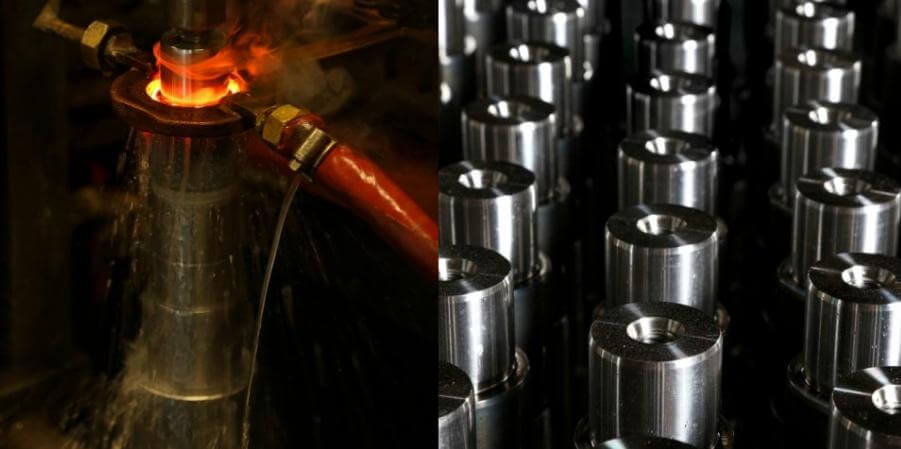
High-frequency induction heating is essential in industries where fast, localized heating is needed without damaging the workpiece. Applications include surface hardening and brazing, where precise control over the heating process is critical.
Medium Frequency Induction Heating
Medium-frequency induction heating operates within the 1 kHz to 10 kHz range. This lower frequency enables deeper heat penetration into the workpiece, making it suitable for applications requiring uniform heating of larger or thicker materials.
Key Characteristics of Medium-Frequency Induction Heating:
- Uniform Heating: The medium frequency results in more uniform heating across the entire workpiece, reducing the risk of thermal stresses and ensuring consistent material properties.
- Deeper Heat Penetration: The heat penetrates deeper into the material, making medium-frequency induction heating ideal for processes like tempering, annealing, and hardening of larger components.
- Ideal for Larger Workpieces: This frequency range is ideal for heating larger components, such as shafts, gears, and pipes, where uniform and deeper heating is necessary.
Medium-frequency induction heating is particularly advantageous for applications where uniform heating is crucial. It helps to achieve consistent material properties and avoid overheating that could lead to deformation or damage.
Advantages and Considerations of High and Medium Frequency Induction Heating
High Frequency Induction Heating
Advantages:
Rapid Heating Cycles: High-frequency induction heating leads to quick heating times, increasing productivity.
Ideal for Surface Treatments: Perfect for applications like surface hardening and brazing, especially for smaller workpieces.
Considerations:
Shallow Heat Penetration: High-frequency heating may not be suitable for larger workpieces requiring deep heating.
Thermal Gradients: There is a potential for residual stresses due to uneven heat distribution.
Medium Frequency Induction Heating
Advantages:
Deeper Heat Penetration: Medium-frequency heating provides more uniform heating and deeper heat penetration, making it ideal for larger components.
Reduced Risk of Thermal Stresses: The uniform heating reduces the risk of thermal stress and maintains material integrity.
Considerations:
Longer Heating Times: Compared to high-frequency heating, medium-frequency induction may take longer to heat materials.
Larger Equipment Requirements: Due to the deeper heat penetration, medium-frequency equipment tends to be larger and more robust, which may be an issue in limited spaces.
Induction Heating Frequency Selection: Choosing the Right Equipment
When selecting induction heating equipment, several factors must be considered, such as the material type, thickness of the workpiece, the specific heating process, and the required heating speed.
Medium Frequency Induction Heating: This is a versatile option suitable for a variety of heating applications, including hardening and tempering of thicker metals. It offers a balanced solution between heating speed and depth, making it ideal for large-scale industrial operations.
High Frequency Heating Furnace: For processes requiring fine control over the heating of small, delicate parts, high-frequency induction is the preferred choice. It is excellent for applications such as brazing and surface hardening, where minimal heat penetration is needed but rapid heating is essential.
For larger workpieces, medium-frequency induction heating is ideal, as it provides deeper heat penetration and uniform heating. On the other hand, for smaller components where quick surface treatments are required, a high-frequency induction heating furnace would be the most efficient choice.
Key Differences Between High and Medium Frequency Induction Heating
| Feature | Medium Frequency Induction Heating | High Frequency Induction Heating |
| Frequency Range | 1 kHz to 10 kHz | 60 kHz to 200 kHz |
| Heat Penetration | Deeper (up to 6 mm) | Shallower (1.2-1.5 mm) |
| Ideal for Workpiece Size | Larger components (45-90 mm diameter) | Smaller, delicate components |
| Applications | Hardening, tempering, annealing, and uniform heating of larger parts | Surface treatments like brazing, surface hardening, and soldering |
| Heating Speed | Slower, longer heating times | Faster heating cycles reduce processing time |
| Uniformity of Heating | More uniform heating, ideal for large parts | Heat concentrated near the surface, ideal for thin material treatments |
| Equipment Size | Larger, more robust equipment | Smaller, compact equipment |
| Advantages | Deeper heat penetration reduces thermal stress | Rapid heating, ideal for surface treatments |
| Considerations | Longer heating times, more robust equipment | Shallow penetration may not be suitable for larger components |
| Best for | Larger workpieces like shafts, gears, and pipes | Smaller workpieces such as small gears, bearings, and shafts |
Conclusion
Understanding the differences between high frequency heating furnaces and medium-frequency induction heating is crucial for optimising industrial heating processes.
Each frequency range offers distinct advantages based on the workpiece size, material properties, and desired heating effect.
By selecting the appropriate induction heating frequency, industries can achieve more efficient and cost-effective heating for various applications.
For tasks involving surface hardening, brazing, or rapid heating of small components, high-frequency induction heating is ideal. Conversely, for larger components requiring deeper heat penetration and uniform heating, medium frequency induction heating is the preferred choice.
By carefully considering the specific requirements of each application and utilizing the right induction heating frequency selection, businesses can significantly improve their production efficiency and the quality of the finished product.
KEXIN’s induction melting furnace has higher thermal efficiency and lower energy consumption. They can produce a mild metal bath mixture, mixing a uniform alloy at a constant and uniform temperature. For these reasons, this type of furnace is the first choice for induction melting. Kexin products can flexibly meet all customer requirements.
Can we help you?