
 Whatsapp
How to Select An Induction Heating System for Your Project?
Selecting the right induction heating system for your project is essential to ensure optimal performance and efficiency. Factors such as power output, frequency range, heating capabilities, and control options all play a vital role in determining whether an induction heating system is suitable for your specific project requirements.
In this article, we will provide you with a comprehensive guide on how to select the perfect induction heating system for your project, ensuring that you achieve your desired results with the highest precision and accuracy.
What is an Induction Heating System?
Induction heating is a method of heating conductive materials using electromagnetic induction. An induction heating system consists of an induction coil that generates an electromagnetic field and a power source that supplies alternating current to the coil. When the material to be heated is placed in the electromagnetic field, eddy currents are generated inside the material and the material heats up due to its resistance.
Induction heating is used in a variety of applications such as welding, heat treatment, and metal melting. It is known for its efficiency, speed, and controllability compared to other heating methods.


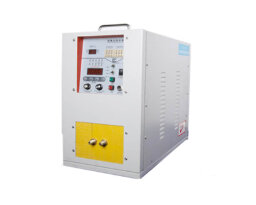
The Principle of Induction Heating
Induction heating is a method of heating metal objects using electromagnetic induction. The process involves passing an alternating current through a coil, which creates a magnetic field around the object being heated. The magnetic field induces eddy currents within the metal, causing it to heat up due to resistance.
The principle of induction heating relies on the interaction between the magnetic field and the conductive material, rather than direct contact with the heating element. This allows metal objects to be heated quickly and efficiently without the need for physical contact or an open flame.
Key Features to Look for in An Induction Heating System
Induction heating systems are an advanced technology used in a variety of industrial processes such as metal hardening, welding and brazing. When selecting an induction heating system, several key features must be considered to ensure optimal performance, efficiency and reliability. Here are the main features to look for in an induction heating system:
Understanding Application Requirements
Before delving into the selection process, it is critical to clearly define the heating objectives for your application. Whether it is case hardening, brazing, annealing, or any other specific process, a clear understanding of the heating requirements ensures that the equipment selected is consistent with the desired results.
Different materials react differently to induction heating. It is critical to understand the properties of the workpiece material, such as its magnetic and electrical conductivity. This knowledge guides the selection of the appropriate frequency and power level to ensure efficient heating.
Here are some key factors to consider when evaluating your application requirements:
1. Power requirements: Determine the amount of power required for your application, as well as the frequency and voltage requirements. Different applications may require different power levels to achieve the desired results.
2. Heating capacity: Consider the size of the workpiece or material that needs to be heated and the required heating rate. The induction heating system should be able to provide the necessary heating capacity to achieve the desired results.
3. Heating time: Determine the heating time required for the application, as well as any specific temperature profiles that need to be achieved. The induction heating system should be able to heat the workpiece efficiently and quickly to meet the application requirements.
4. Temperature control: Consider whether the application requires precise temperature control. Some induction heating systems offer temperature monitoring and control capabilities to ensure accurate heating.
5. Process Automation: Determine if the application requires automated processes or controls. Some induction heating systems offer programmable features that allow for automated processes and controls.
6. Safety Considerations: Consider any safety requirements or considerations for the application, such as whether temperature monitoring, emergency stop functions, or safety interlocks are required.

Selecting the Right Equipment Type
Induction heating equipment is available in a variety of configurations, including handheld devices, stationary machines, and automated systems. The choice depends on the size and nature of the application. Smaller handheld devices may be suitable for local repairs or smaller parts, while larger automated systems are well suited for high-volume production processes.
The design and configuration of the induction heating coil plays a critical role in the performance of the induction heating equipment. Coils come in different shapes and sizes, each suited to a specific application. For example, a spiral coil is suitable for heating long cylindrical parts, while a flat coil is suitable for flat surfaces. Matching the coil design to the workpiece geometry is critical to achieving uniform heating.
When selecting an induction heating system, consider the following factors to ensure it meets your specific needs:
- Power output: Evaluate power requirements based on workpiece size, material, and desired heating rate and temperature.
- Frequency: Select the appropriate frequency; for smaller parts, higher frequencies provide faster heating; for larger parts, lower frequencies provide deeper heating.
- Coil design: Select standard, custom, or multi-turn coils, as they affect heating efficiency and effectiveness.
- Cooling system: Ensure proper heat dissipation using air, water, or closed-loop cooling systems.
- Control system: Choose a control system that provides precise temperature control and monitoring for best results.
- Application-specific features: Consider other requirements such as automation systems, temperature analysis, or data logging.

Selecting the right power supply for your induction heating system
Accurately calculating the power requirements of your application is critical. Induction heating equipment varies in power output, and selecting the right power level ensures efficient heating and avoids unnecessary energy consumption. Factors such as workpiece size, desired heating rate, and the thermal conductivity of the material all affect power calculations.
Induction heating equipment, such as high-frequency induction machines, operates at different frequencies, from low to high. Low-frequency induction is good for heating large and deep parts, while high-frequency induction excels in surface heating applications. Understanding the specific needs of your application can help you select the best frequency for efficient and precise heating.
Selecting the right power supply for your induction heating system is key to achieving optimal performance and efficiency.
Here are some factors to consider:
- Power output: Make sure the power supply meets the power requirements calculated based on the workpiece size, material, and desired heating rate.
- Frequency range: Match the power supply’s frequency (50-1,200 kHz) to the needs of your application.
- Control capabilities: Select a power supply that can precisely control output, frequency, and other parameters to optimize energy efficiency.
- Cooling system: A robust cooling system is critical to prevent overheating and ensure reliability.
- Reliability and durability: Choose a high-quality power supply from a reputable manufacturer with features such as thermal protection and overload protection.
Choosing the appropriate coil design for efficient heating
There are several key factors to consider when choosing the right coil design for efficient heating.
First, you need to consider the material of the coil. Generally, coils made of high-conductivity materials, such as copper or aluminum, are more effective at conducting heat and providing even heating.
Next, consider the shape and size of the coil. Coils with larger surface areas generally heat more evenly and more efficiently than smaller coils. Additionally, the shape of the coil affects the distribution of heat, with spiral or helical coils generally providing more even heating than straight coils.
Finally, consider the power supply and voltage requirements of the coil. Make sure the coil is compatible with the power supply you plan to use, and consider whether a higher voltage coil might heat faster and more efficiently to meet your needs.
Conclusion
Induction heating systems have revolutionized modern industrial processes by providing unmatched efficiency, precise temperature control, and versatile applications across industries. Their role in ensuring reliable and sustainable heating solutions underscores their importance in the industrial sector.
Selecting the right induction heating system for your project requires careful consideration of several key factors, including application requirements, power levels, frequency, and budget constraints. By thoroughly evaluating these factors and understanding the unique capabilities of various systems, you can make an informed decision that meets your project goals.
KEXIN’s induction melting furnace has higher thermal efficiency and lower energy consumption. They can produce a mild metal bath mixture, mixing a uniform alloy at a constant and uniform temperature. For these reasons, this type of furnace is the first choice for induction melting. Kexin products can flexibly meet all customer requirements.
Can we help you?