
 Whatsapp
Understanding the Challenges of Melt-Casting Cast Iron in an Induction Furnace
In modern foundries, many processes are shifting from traditional cupola or electric arc furnace methods to induction furnace systems. There are compelling reasons for this: more precise control, lower emissions, faster melting rates, and cleaner charge handling.
However, the transition is not always smooth when applying induction furnaces to cast iron production, particularly gray or ductile iron. Unlike other metals, cast iron presents a unique set of metallurgical and operational challenges.
This article will explore the main problems foundries face when using induction furnaces to melt cast iron, analyze their root causes, and outline corresponding strategies to help you fully leverage the advantages of induction furnace technology without compromising quality or output.
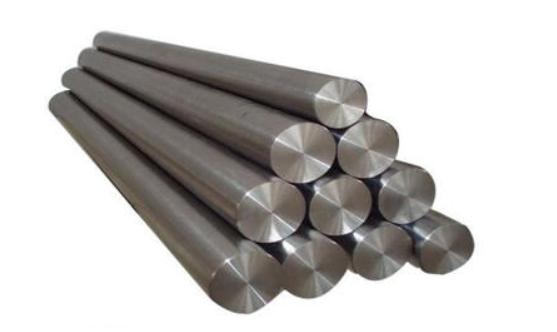
Why Use an Induction Furnace for Cast Iron?
Before delving into the specifics, let’s review why induction furnaces are increasingly used in cast iron smelting.
Induction furnaces use electromagnetic induction to directly heat the metal charge. In other words, eddy currents and magnetic fields generate heat within the metal.
This means there’s no need for direct combustion, fuel handling, or coke, resulting in cleaner operation and faster heating cycles.
Compared to traditional cupola furnaces, induction furnace systems offer better alloy control, lower emissions, and greater repeatability. However, in reality, induction melting of cast iron is not as “plug-and-play” as one might expect, it involves considerable complexity.
The Unique Complications of Cast Iron in Induction Furnaces
When melting cast iron in an induction furnace, foundries commonly encounter a cluster of interrelated issues: increased supercooling, poor inoculation response, structural defects in castings, shrinkage and porosity, decarburization, and increased energy consumption. Let’s examine some of the core problem areas.
1. Increased Supercooling and Graphite Nucleation Difficulties
A prime challenge is that induction-melted cast iron tends to experience a higher degree of supercooling during solidification compared to iron melted in a cupola.
Because the molten iron charge is cleaner and solidifies under more stable conditions, the nucleation of graphite or ferrite phases becomes more difficult. The result: harder structure, increased cementite formation, and impaired mechanical properties. This is particularly problematic for grey irons where graphite flake formation is essential.
2. Reduced Inoculation Effectiveness
In traditional cupola melts, impurities, refractory particles, and spawn cores often aid nucleation of graphite. In contrast, induction melts tend to be more homogeneous and free of such cores. It sounds good, but in casting practice it reduces the effectiveness of inoculation treatments.
The consequence is graphite degeneration, a higher incidence of hard spots or “white iron” areas, reduced tensile strength, and brittle behavior.
3. Decarburization, Desulfurization, and Alloy Control Issues
Because induction melting typically uses a scrap/charge mixture and the molten pool is more violently agitated under electromagnetic forces, controlling carbon and sulfur becomes more difficult. Foundries report increased decarburization, elevated nitrogen absorption, or unstable manganese/sulfur content.
4. Shrinkage, Porosity, and White-Iron Hard Spots
When supercooling is excessive, solidification doesn’t proceed via ideal graphite/ferrite formation. The increased supercooling promotes cementite lamellae or white-iron regions, along with micro-shrinkage cavities and porosity.
These defects may not be obvious immediately but they reduce ductility, increase the risk of cracking, and degrade casting performance.
5. Charge Mix & Scrap Quality Dependencies
In induction furnaces, the mix of pig iron, scrap steel, return material, and alloy additions becomes far more critical than in a cupola system. For example, some foundries discovered that using more than 50 % scrap steel combined with high manganese and high sulfur content led to systematic shrinkage defects and persistent white-iron spots.
Poor quality scrap increases inclusions, nitrogen uptake, and unpredictable behaviour in the melt. The cleaner melt environment of induction furnaces amplifies the impact of each variable.
6. Refractory and Lining Wear
Beyond metallurgical issues, induction furnaces face mechanical and thermal stresses: metal bath stirring caused by electromagnetic fields accelerates refractory erosion and lining thinning.
As the lining degrades, refractory penetration or coil exposure can cause catastrophic coil failure, metal leakage or down-time.
7. Downtime and Operational Costs
While induction furnaces generally offer advantages such as high energy efficiency and clean operation, the aforementioned issues, along with stricter charge preparation and process control, can increase downtime, scrap rates, and operator workload. If poorly managed, cost savings can be offset by quality losses or production delays.
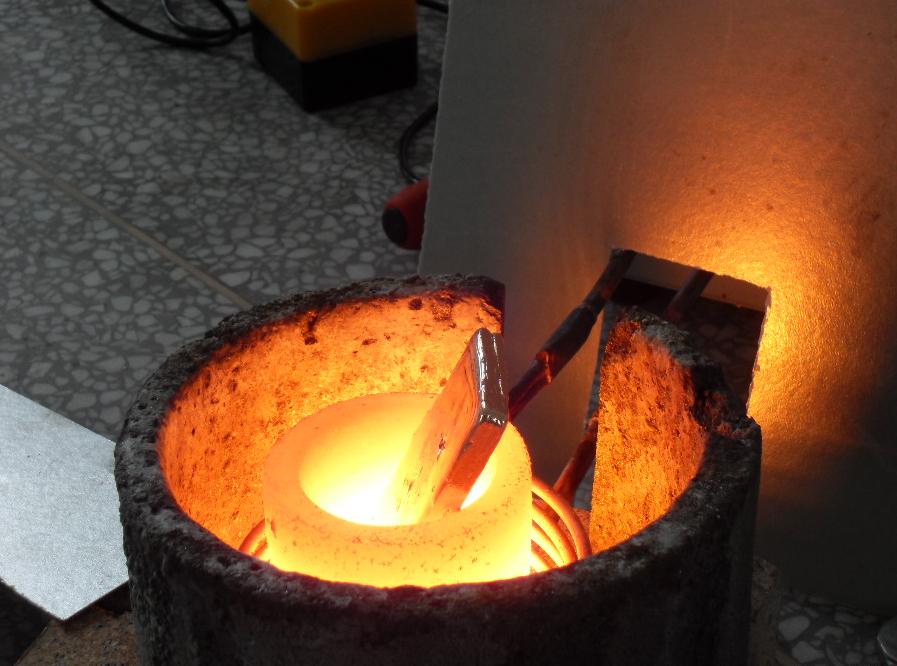
Why do These Problems Occur?
Understanding why these issues arise helps in developing effective solutions.
Clean bath environment: Induction melting tends to produce a metal bath with fewer inclusions and fewer heterogeneous particles. While this sounds beneficial, it reduces nucleation sites for desirable graphite or ferrite phases.
Charge composition variability: Higher levels of scrap steel, mixed return materials, and varying alloy content introduce instability in chemistry and physical behavior.
Electromagnetic stirring & rapid heating: The intense stirring in the molten metal bath promotes increased gas absorption, faster heating cycles and increased superheating, all contributing to poor solidification dynamics.
Insufficient inoculation or over-reliance on existing habits: Foundries accustomed to cupola practices may apply the same inoculation routines in induction melts, but because the melt environment is radically different, the inoculants may not perform as expected.
Scrap contamination and tramp elements: The Presence of copper, tin, or high manganese/sulfur ratios disturb the iron-carbon equilibrium and promote undesired microstructures.
Refractory/lining design mismatches: Induction furnaces demand more precise refractory materials and cooling controls, failure in these systems causes increased wear and unscheduled maintenance.
Best Practices for Successful Cast Iron Melting in Induction Furnaces
The good news is that these challenges are by no means insurmountable. With proper attention to process design, metallurgy, charge control, and equipment maintenance, foundries can run induction furnaces for cast iron with excellent results.
A. Charge Mix Optimization
- Maintain a balanced mix: many plants recommend pig iron : scrap : return material ratios around 40–50 : 30–40 : 10–20 % for grey cast iron. Deviating heavily into high-scrap steel introduces risk.
- Pre-sort and clean scrap: remove rust, sand, or attachments that become non-metallic inclusions or promote slag.
- Limit high-sulfur or high-phosphorus inputs; monitor manganese and sulfur interactions.
B. Inoculation & Alloying Control
- It should be noted that supercooling is more common in induction melting, and the inoculation treatment method should be adjusted accordingly. This may mean increasing the amount of inoculant, optimizing the inoculant formulation, or adjusting the inoculation time.
- For ductile iron, the magnesium treatment time should be properly controlled, and melt stirring should be strictly controlled to avoid affecting the spheroidization process.
- Monitoring dissolved gases: Electromagnetic stirring increases the absorption of nitrogen or hydrogen, so degassing or nitrogen control may be necessary.
C. Temperature and Melt Practice
- Avoid excessive superheating: higher melt temperatures increase carbon loss, nitrogen uptake, oxidation, and refractory wear.
- Maintain proper tapping temperature and pouring practices: too high or too low temperatures can impact solidification behavior and graphite formation. Maintain a slag cover to reduce oxidation, heat loss and gas absorption.
D. Refractory & Furnace Maintenance
- Use high-quality refractories designed for induction furnace servic, rams, castables, magician-carbon mixes as appropriate for cast iron applications.
- Monitor lining thickness and integrity regularly. Excessive bath stirring or metal erosion can reduce lining life dramatically.
- Modern Casting
- Ensure cooling systems, induction coils, and power electronics are maintained and free from leaks or corrosion.
E. Process Monitoring and Quality Control
- Closely monitor the chemical composition of the molten metal, including carbon equivalent, silicon, manganese, sulfur, phosphorus, and nitrogen.
- Measure the shape, spheroidization, and microstructure of graphite using cold wedges or sample bars as part of routine quality control.
- Analyze casting defects and correlate them with the smelting process.
F. Operator Training and Best Practices
- Induction melting demands stricter discipline than older methods. Operators must understand the differences: faster melting, less tolerance for tramp elements, and a narrower window for effective inoculation.
- Implementation of standard operating procedures, checklists, and preventive maintenance schedules pay dividends in reducing scrap and downtime.
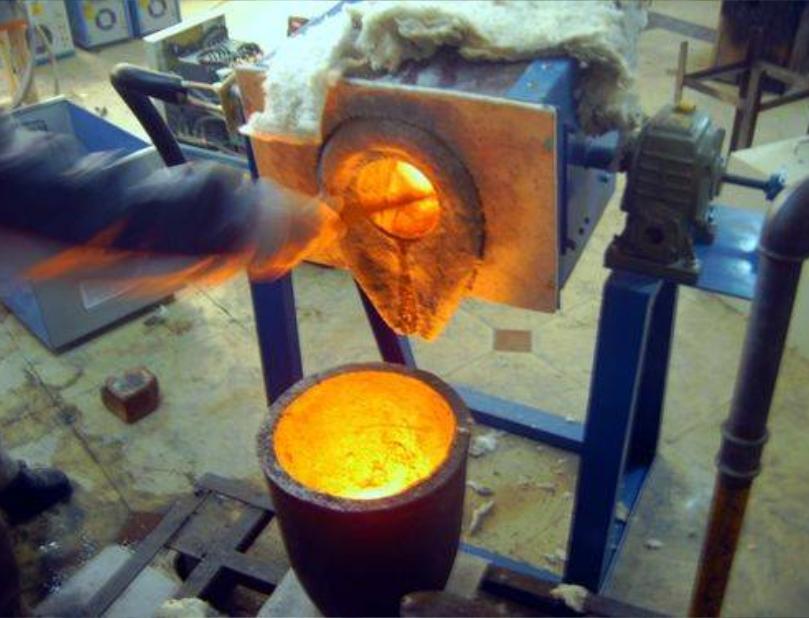
Why Induction Is Still Worth It for Cast Iron?
Even with these challenges, induction furnaces offer strong advantages when properly managed:
Energy efficiency: direct heating inside the metal reduces fuel waste and lower losses compared to coke-fired systems.
Cleaner production: fewer emissions, less smoke and dust, easier environmental compliance.
Precise control of melt chemistry and temperature: essential for modern cast iron grades and alloying.
Smaller footprint and faster turnaround: smaller volume melts, shorter cycle times, and flexible batch sizes.
When the process is optimized, a foundry can achieve excellent cast iron quality, high yields, and reliable production, all while moving away from older, dirtier technologies.
Conclusion
Transitioning cast iron melting processes to induction furnaces offers significant potential advantages, including higher efficiency, cleaner production, and more precise control. However, it’s not without its challenges.
H&F Induction Furnaces focuses on helping foundries address these challenges, providing induction furnace systems, process consulting, and maintenance support, with a specialization in cast iron melting.
If you are considering retrofitting or improving your existing cast iron induction melting process, please contact us. We will ensure you achieve the metallurgical and operational results you require.
KEXIN’s induction melting furnace has higher thermal efficiency and lower energy consumption. They can produce a mild metal bath mixture, mixing a uniform alloy at a constant and uniform temperature. For these reasons, this type of furnace is the first choice for induction melting. Kexin products can flexibly meet all customer requirements.
Can we help you?