
 Whatsapp
Induction Hardening: Learn its Processes, Advantages, Disadvantages & Applications
In modern manufacturing, durability is key. Machine parts, tools, and components are constantly exposed to friction, impact, and fatigue.
One of the most effective ways to extend the life of these parts is through induction hardening—a process that enhances surface hardness without compromising the internal strength of a material.
In this article, we’ll explore how induction hardening works, what it does to a material’s properties, where it’s used, and how it compares to other hardening methods.
The Process of Induction Hardening
At its core, induction hardening is a heat treatment process that uses electromagnetic fields to harden the surface of metal components.
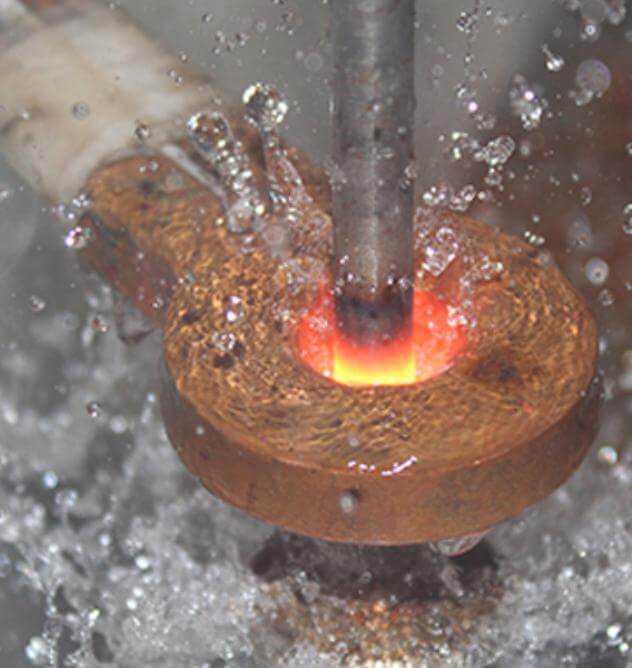
The process begins with placing a metal part inside a coil through which alternating current flows. This current generates a magnetic field that heats the outer layer of the part quickly and precisely.
Once the desired temperature is reached—typically high enough to form austenite in steel—the part is rapidly quenched. This sudden cooling transforms the heated layer into martensite, a much harder and more wear-resistant microstructure.
What makes induction hardening unique is its ability to harden only selected areas of a component, leaving the core untouched and ductile.
Effects on Physical and Mechanical Properties
Induction hardening doesn’t just toughen up the exterior—it changes how the entire component performs under load. The hardened surface resists wear and deformation, making it ideal for parts exposed to repetitive contact, pressure, or stress.
Meanwhile, the softer, untreated core retains its ability to absorb shock and flex slightly under load, preventing brittle failure.
The combination of a tough core and a hard shell creates components that can endure cyclic loading and mechanical fatigue far better than untreated ones.
For industries where downtime is expensive and parts must last longer under harsh conditions, this improved performance is invaluable.
What Materials Work Best?
Not all metals respond equally well to induction hardening. The process is most effective on medium to high-carbon steels, which can form martensite upon quenching. Alloys such as 1045, 4140, and 4340 are commonly used because they offer the right balance of hardenability and strength.
Materials with low carbon content lack the ability to harden through this process unless they undergo carburizing beforehand.
Some types of cast iron and tool steel can also be induction hardened under specific conditions. Ultimately, the choice of material plays a crucial role in determining the effectiveness of the treatment.
Induction Hardening vs. Case Hardening
While both processes aim to increase surface hardness, their methods and ideal applications differ:
| Aspect | Induction Hardening | Case Hardening |
| Heat Source | Electromagnetic induction | Furnace or torch |
| Processing Time | Very fast (seconds to minutes) | Slower (hours) |
| Material Requirement | Medium/high-carbon steels | Low-carbon steels (with carburising) |
| Control Over Depth | High, frequency-adjustable | Less precise |
| Distortion Risk | Low | Higher due to prolonged heating |
| Cost Structure | High initial setup, low per-part cost | Lower setup, more time-intensive |
Induction hardening is generally preferred for high-performance parts where precision and repeatability are key.
Advantages Worth Noting
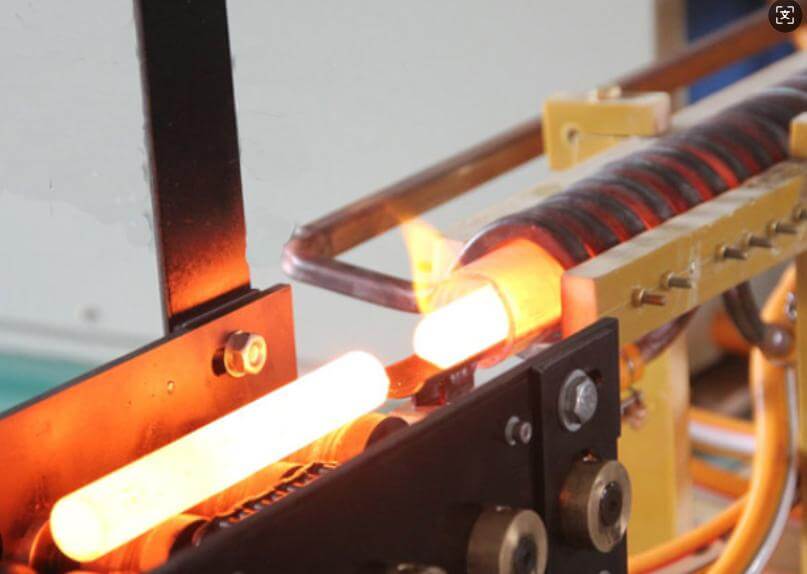
One of the greatest strengths of induction hardening is control. Manufacturers can adjust heating depth by tuning the frequency, making the process highly adaptable to different part sizes and applications. This precision also means there’s less distortion during treatment, reducing the need for post-process machining.
The speed of induction hardening is another major benefit. Parts can be treated in seconds rather than hours, boosting productivity. And because the process heats only targeted areas, it consumes less energy and produces fewer emissions than furnace-based treatments, making it an eco-friendlier choice.
Recognising the Limitations
Despite its many benefits, induction hardening isn’t perfect. The initial cost of equipment—especially the power supplies and custom coils—can be high. For smaller operations or those with a wide variety of part geometries, the expense of designing and maintaining coils can become a barrier.
Additionally, the process requires technical expertise. Operators need to understand metallurgy, frequency selection, and heat treatment dynamics to get consistent, high-quality results. And while induction hardening is excellent for regular, symmetrical parts, it can struggle with complex or irregular geometries, where heating may become uneven.
Challenges in Application
Beyond cost and complexity, induction hardening comes with practical challenges. For instance, parts with sharp corners or deep recesses may not heat uniformly, leading to inconsistent hardness or potential cracking. Quenching must also be carefully managed—cooling too quickly or unevenly can induce thermal stress or even warping in the component.
Another issue is process repeatability. While automation helps, any variation in power delivery, part positioning, or coil wear can affect treatment results. Manufacturers need to maintain strict quality control and equipment calibration to avoid defects.
Where Induction Hardening Makes a Difference
Thanks to its efficiency and performance, induction hardening is widely used in several industries. In the automotive sector, it’s employed for hardening gears, crankshafts, camshafts, and axles—components that experience constant stress and rotation. Railways use it for tracks and coupling systems, while aerospace engineers rely on it for landing gear and moving parts.
It’s also common in agriculture, defence, and industrial machinery—anywhere components must last longer and perform under pressure without failure.
Conclusion
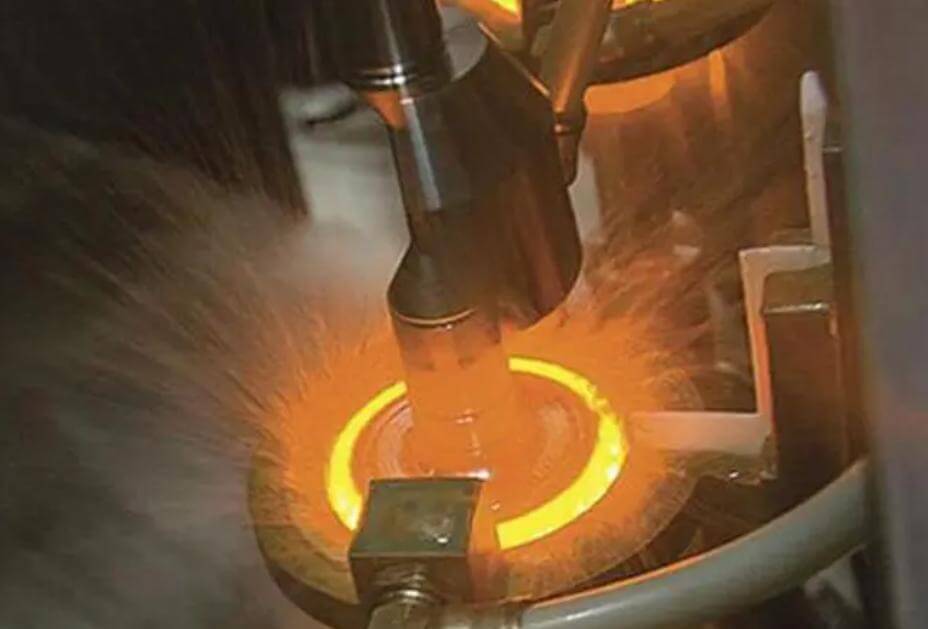
Induction hardening is more than a surface treatment—it’s a powerful manufacturing tool that blends precision with performance. By targeting only the areas that need strengthening, it conserves energy, speeds up production, and extends part life.
While the process comes with certain limitations and requires technical expertise, its benefits in strength, reliability, and efficiency make it an essential technique in modern industry.
As technologies like simulation and automation continue to evolve, the capabilities of induction hardening are expanding, making it even more adaptable and accessible.
For manufacturers aiming to produce high-quality, long-lasting components, induction hardening remains a smart investment—and a cornerstone of advanced material engineering.
KEXIN’s induction melting furnace has higher thermal efficiency and lower energy consumption. They can produce a mild metal bath mixture, mixing a uniform alloy at a constant and uniform temperature. For these reasons, this type of furnace is the first choice for induction melting. Kexin products can flexibly meet all customer requirements.
Can we help you?